

Unified Magazine provides expert insights on business, technology, and innovation. We partner with leading entrepreneurs to provide strategic advice and market analysis, empowering professionals and entrepreneurs with resources for success and growth.
Subscribe to Updates
Get the latest creative news from FooBar about art, design and business.

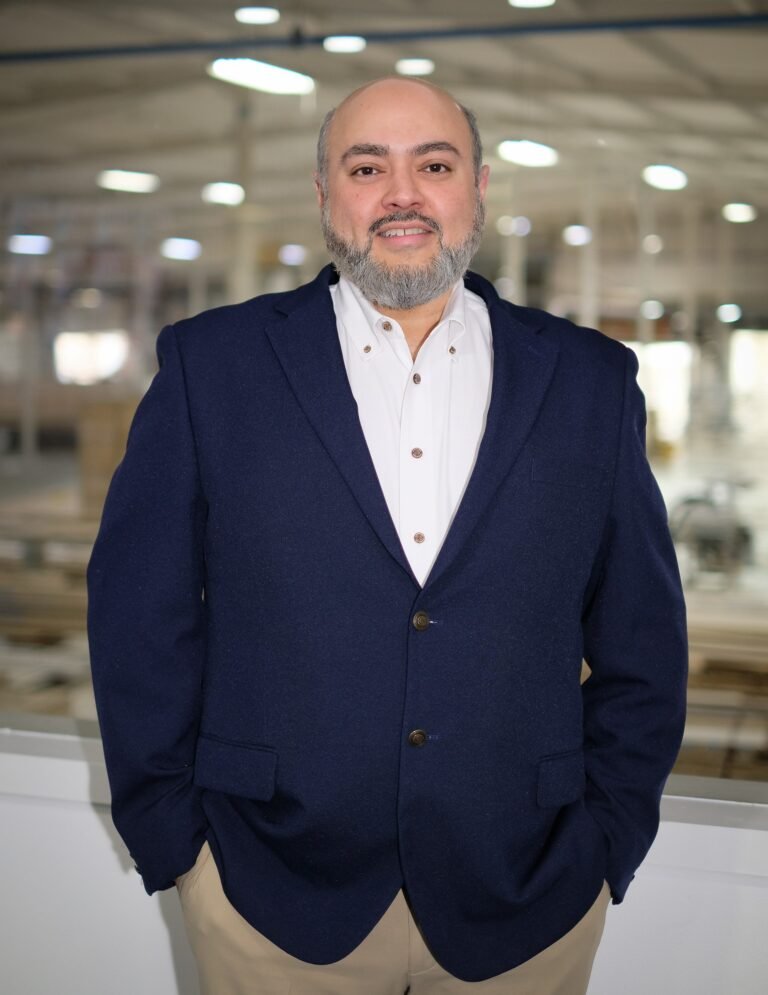
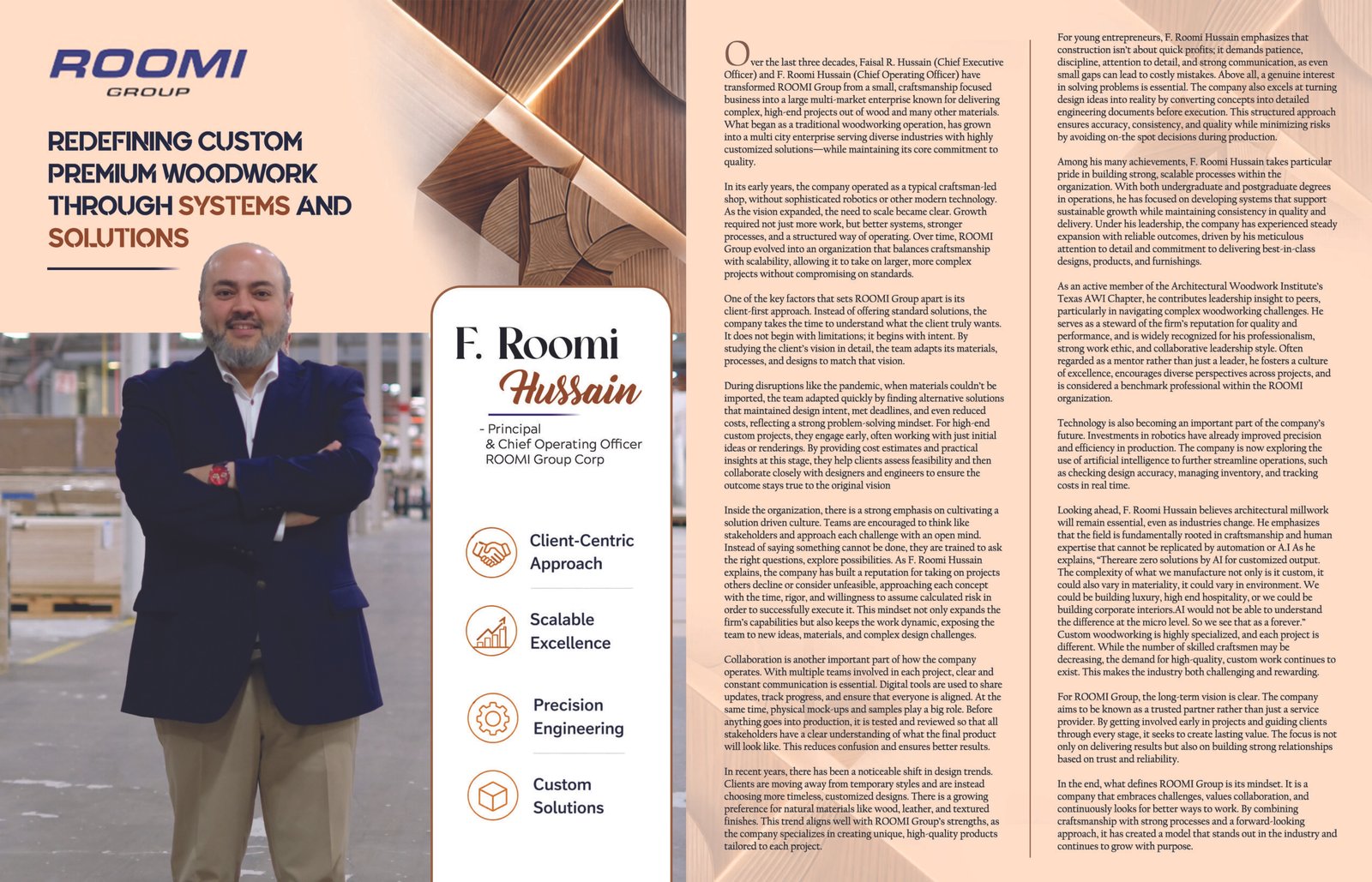
F. Roomi Hussain: Redefining Custom Premium Woodwork through Systems and Solutions
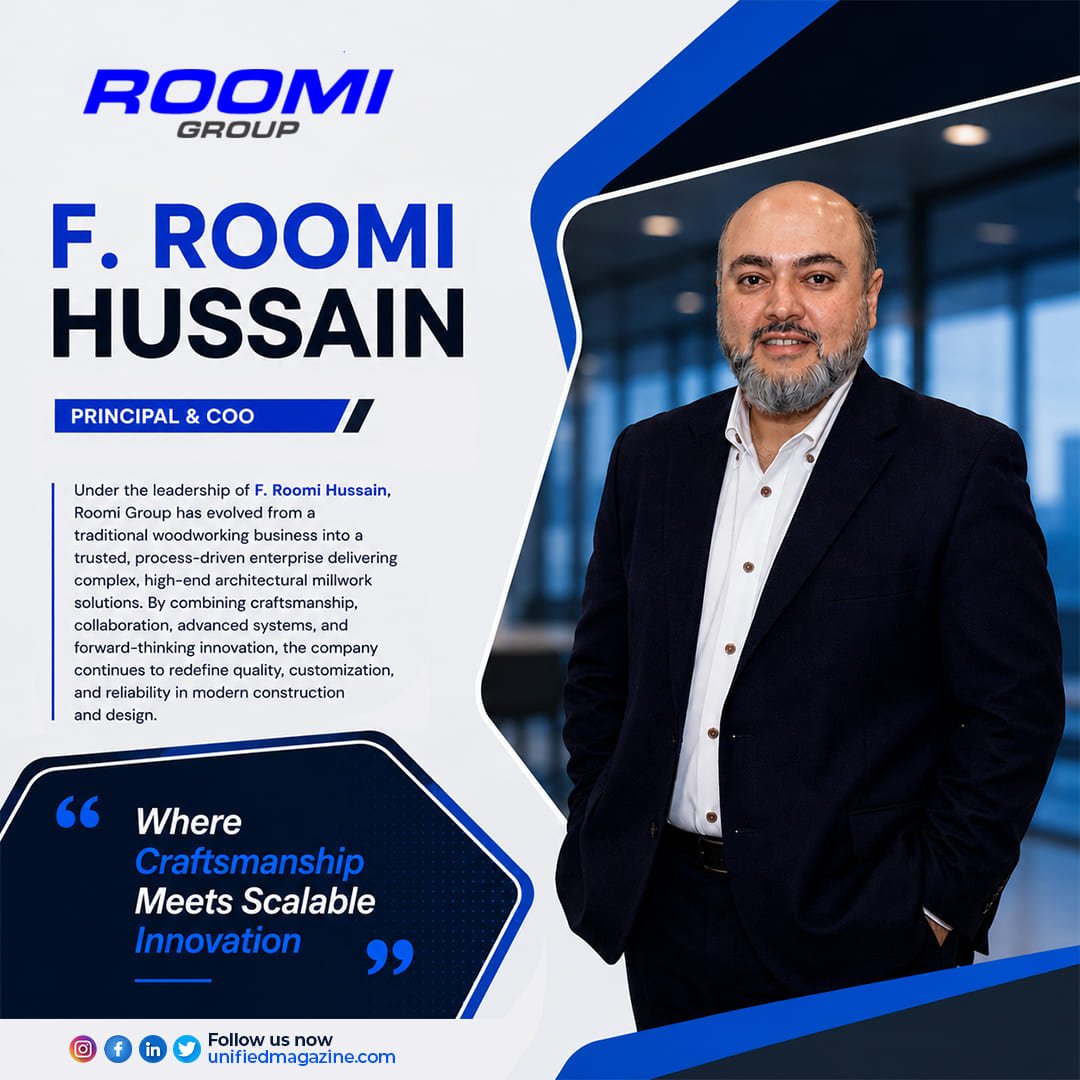
Principal & COO – Roomi Group Corp
ROOMI Group Corp has evolved from a craftsmanship-led woodworking business into a multi-market enterprise delivering complex, high-end custom solutions. Led by Faisal R. Hussain and F. Roomi Hussain, the company combines precision, scalable processes, advanced technology, and timeless craftsmanship to create trusted partnerships across industries.
Faisal R. Hussain's Exclusive
Over the last three decades, Faisal R. Hussain (Chief Executive Officer) and F. Roomi Hussain (Chief Operating Officer) have transformed ROOMI Group from a small, craftsmanship focused business into a large multi-market enterprise known for delivering complex, high-end projects out of wood and many other materials. What began as a traditional woodworking operation, has grown into a multi city enterprise serving diverse industries with highly customized solutions—while maintaining its core commitment to quality.
In its early years, the company operated as a typical craftsman-led shop, without sophisticated robotics or other modern technology. As the vision expanded, the need to scale became clear. Growth required not just more work, but better systems, stronger processes, and a structured way of operating. Over time, ROOMI Group evolved into an organization that balances craftsmanship with scalability, allowing it to take on larger, more complex projects without compromising on standards.
One of the key factors that sets ROOMI Group apart is its client-first approach. Instead of offering standard solutions, the company takes the time to understand what the client truly wants. It does not begin with limitations; it begins with intent. By studying the client’s vision in detail, the team adapts its materials, processes, and designs to match that vision.
During disruptions like the pandemic, when materials couldn’t be imported, the team adapted quickly by finding alternative solutions that maintained design intent, met deadlines, and even reduced costs, reflecting a strong problem-solving mindset. For high-end custom projects, they engage early, often working with just initial ideas or renderings. By providing cost estimates and practical insights at this stage, they help clients assess feasibility and then collaborate closely with designers and engineers to ensure the outcome stays true to the original vision.
Inside the organization, there is a strong emphasis on cultivating a solution driven culture. Teams are encouraged to think like stakeholders and approach each challenge with an open mind. Instead of saying something cannot be done, they are trained to ask the right questions, explore possibilities. As F. Roomi Hussain explains, the company has built a reputation for taking on projects others decline or consider unfeasible, approaching each concept with the time, rigor, and willingness to assume calculated risk in order to successfully execute it. This mindset not only expands the firm’s capabilities but also keeps the work dynamic, exposing the team to new ideas, materials, and complex design challenges.
Collaboration is another important part of how the company operates. With multiple teams involved in each project, clear and constant communication is essential. Digital tools are used to share updates, track progress, and ensure that everyone is aligned. At the same time, physical mock-ups and samples play a big role. Before anything goes into production, it is tested and reviewed so that all stakeholders have a clear understanding of what the final product will look like. This reduces confusion and ensures better results.
In recent years, there has been a noticeable shift in design trends. Clients are moving away from temporary styles and are instead choosing more timeless, customized designs. There is a growing preference for natural materials like wood, leather, and textured finishes. This trend aligns well with ROOMI Group’s strengths, as the company specializes in creating unique, high-quality products tailored to each project.
For young entrepreneurs, F. Roomi Hussain emphasizes that construction isn’t about quick profits; it demands patience, discipline, attention to detail, and strong communication, as even small gaps can lead to costly mistakes. Above all, a genuine interest in solving problems is essential. The company also excels at turning design ideas into reality by converting concepts into detailed engineering documents before execution. This structured approach ensures accuracy, consistency, and quality while minimizing risks by avoiding on-the spot decisions during production.
Among his many achievements, F. Roomi Hussain takes particular pride in building strong, scalable processes within the organization. With both undergraduate and postgraduate degrees in operations, he has focused on developing systems that support sustainable growth while maintaining consistency in quality and delivery. Under his leadership, the company has experienced steady expansion with reliable outcomes, driven by his meticulous attention to detail and commitment to delivering best-in-class designs, products, and furnishings.
As an active member of the Architectural Woodwork Institute’s Texas AWI Chapter, he contributes leadership insight to peers, particularly in navigating complex woodworking challenges. He serves as a steward of the firm’s reputation for quality and performance, and is widely recognized for his professionalism, strong work ethic, and collaborative leadership style. Often regarded as a mentor rather than just a leader, he fosters a culture of excellence, encourages diverse perspectives across projects, and is considered a benchmark professional within the ROOMI organization.
Technology is also becoming an important part of the company’s future. Investments in robotics have already improved precision and efficiency in production. The company is now exploring the use of artificial intelligence to further streamline operations, such as checking design accuracy, managing inventory, and tracking costs in real time.
Looking ahead, F. Roomi Hussain believes architectural millwork will remain essential, even as industries change. He emphasizes that the field is fundamentally rooted in craftsmanship and human expertise that cannot be replicated by automation or A.I As he explains, “Thereare zero solutions by AI for customized output. The complexity of what we manufacture not only is it custom, it could also vary in materiality, it could vary in environment. We could be building luxury, high end hospitality, or we could be building corporate interiors.AI would not be able to understand the difference at the micro level. So we see that as a forever.” Custom woodworking is highly specialized, and each project is different. While the number of skilled craftsmen may be decreasing, the demand for high-quality, custom work continues to exist. This makes the industry both challenging and rewarding.
For ROOMI Group, the long-term vision is clear. The company aims to be known as a trusted partner rather than just a service provider. By getting involved early in projects and guiding clients through every stage, it seeks to create lasting value. The focus is not only on delivering results but also on building strong relationships based on trust and reliability.
In the end, what defines ROOMI Group is its mindset. It is a company that embraces challenges, values collaboration, and continuously looks for better ways to work. By combining craftsmanship with strong processes and a forward-looking approach, it has created a model that stands out in the industry and continues to grow with purpose.

Copyrights ©2026 Unified Magazine. All rights reserved