
Unified Magazine provides expert insights on business, technology, and innovation. We partner with leading entrepreneurs to provide strategic advice and market analysis, empowering professionals and entrepreneurs with resources for success and growth.
Subscribe to Updates
Get the latest creative news from FooBar about art, design and business.
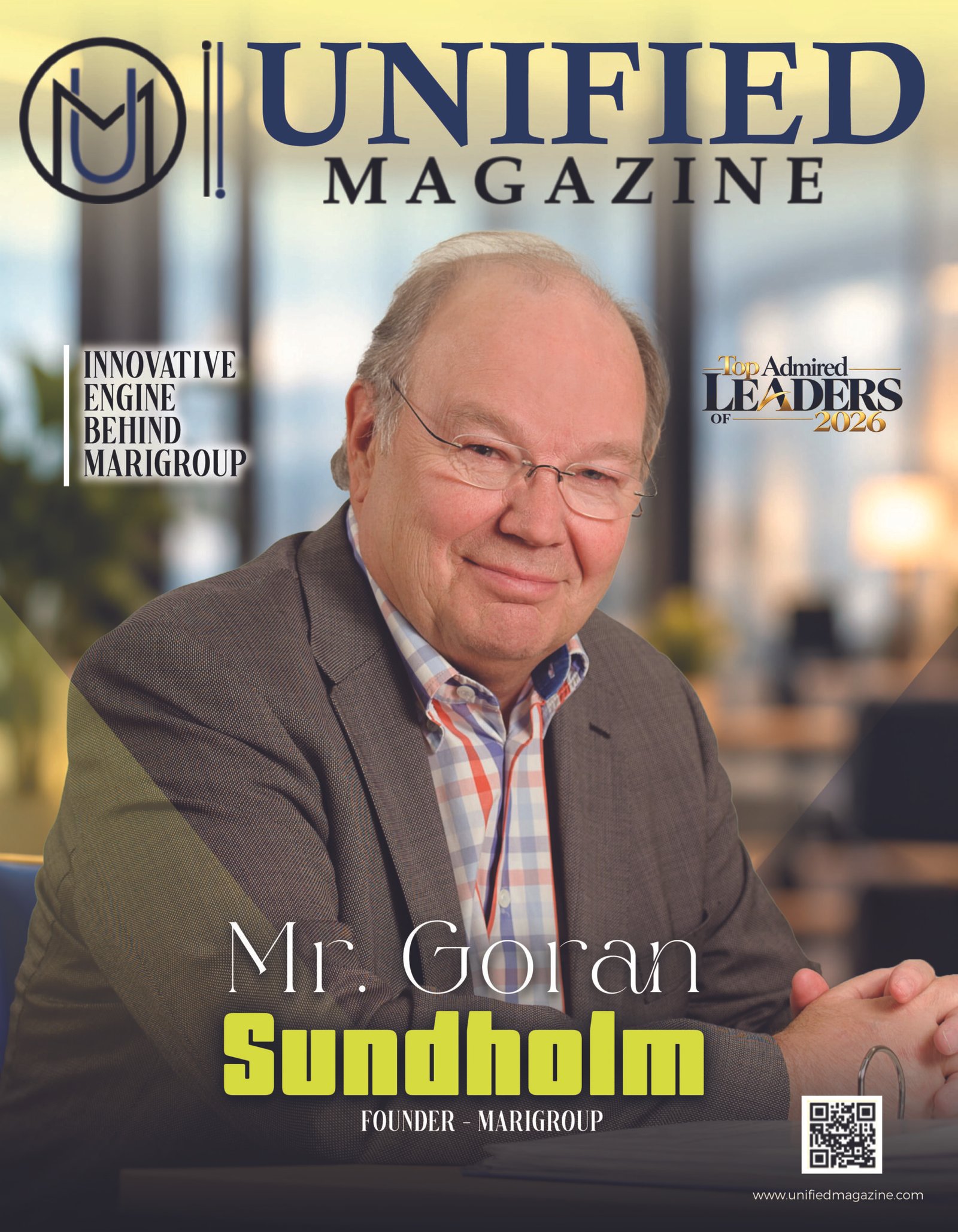
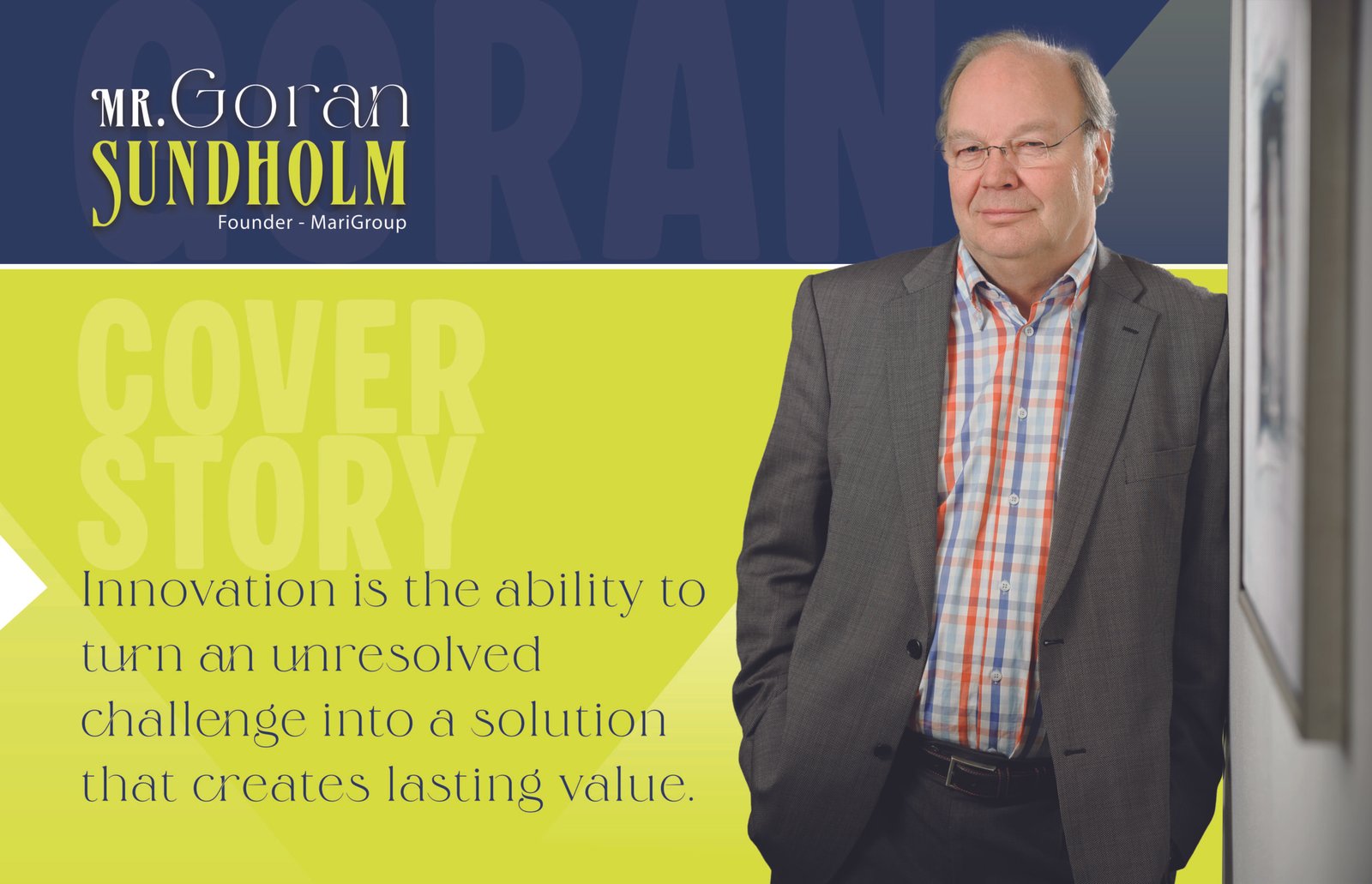
Göran Sundholm: Innovative Engine Behind MariGroup
Founder of MariGroup
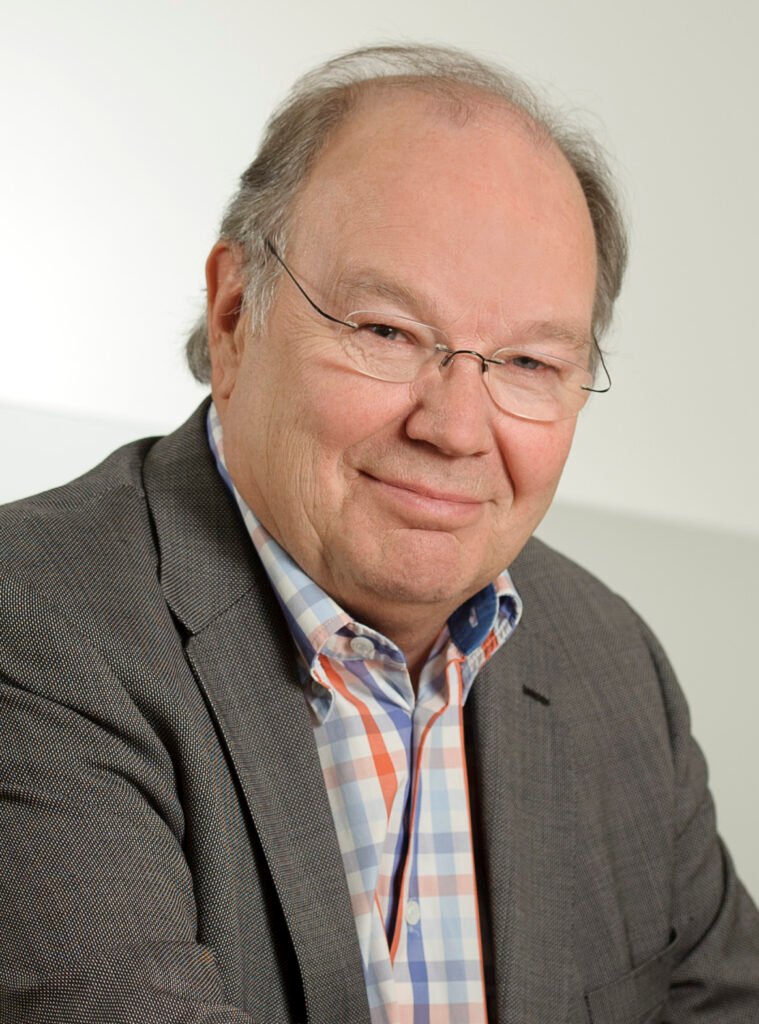
MariGroup is a diverse technology group whose growth and innovation reflect the entrepreneurial vision and transformative leadership of Chairman Göran Sundholm. With more than five decades of experience, Sundholm has consistently turned complex engineering challenges into commercially successful technologies, building and scaling businesses with international reach. His exceptional ability to identify opportunities, drive innovation across industries, and transform patented inventions into market-leading solutions has shaped the group’s evolution. His forward-thinking leadership, engineering expertise, and commitment to practical problem-solving continue to guide MariGroup’s strategic direction, technological advancement, and global ambitions.
Göran Sundholm's Exclusive
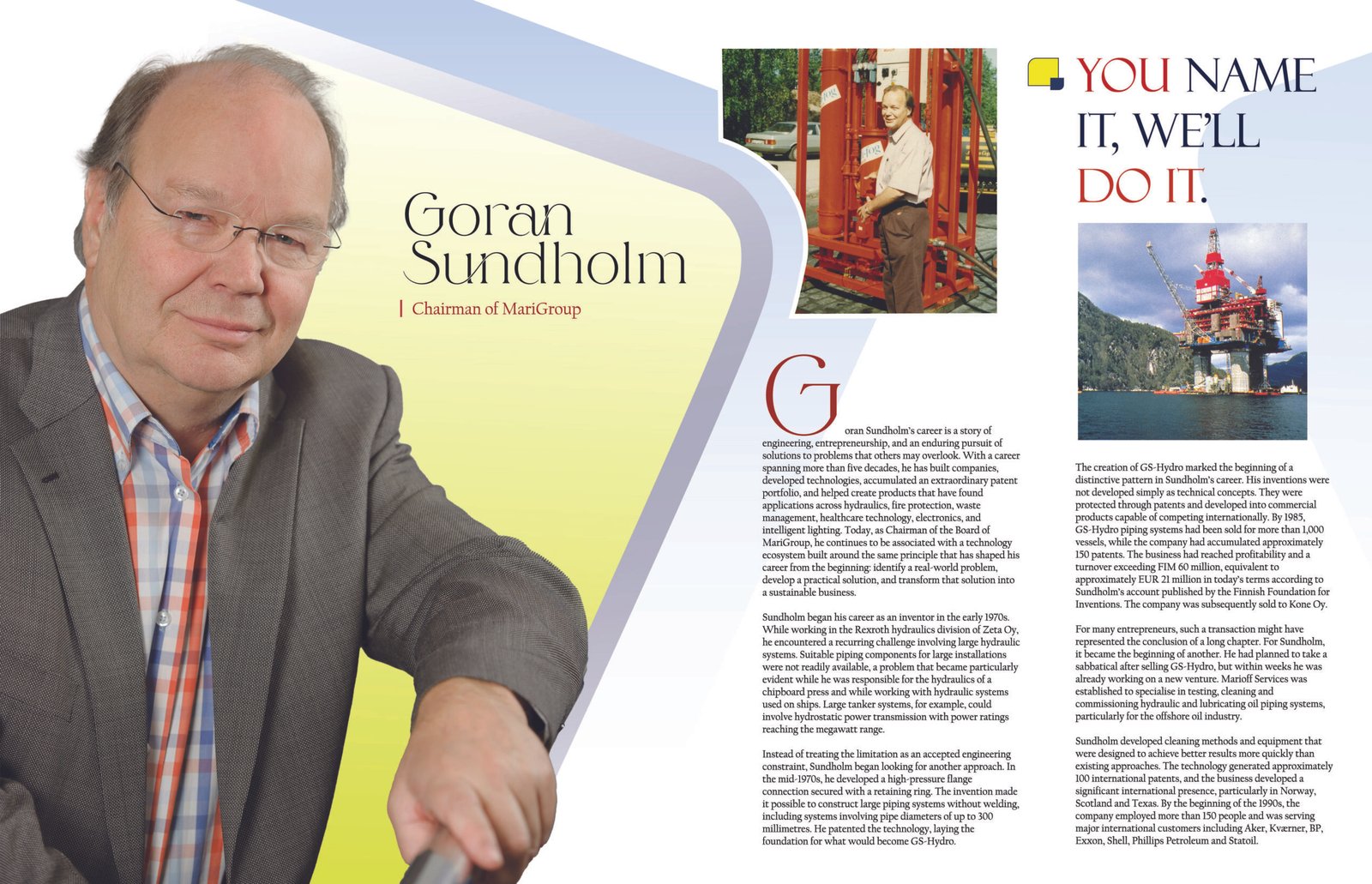
Mr. Göran Sundholm’s career is a story of engineering, entrepreneurship, and an enduring pursuit of solutions to problems that others may overlook. With a career spanning more than five decades, he has built companies, developed technologies, accumulated an extraordinary patent portfolio, and helped create products that have found applications across hydraulics, fire protection, waste management, healthcare technology, electronics, and intelligent lighting. Today, as Chairman of the Board of MariGroup, he continues to be associated with a technology ecosystem built around the same principle that has shaped his career from the beginning: identify a real-world problem, develop a practical solution, and transform that solution into a sustainable business.
Sundholm began his career as an inventor in the early 1970s. While working in the Rexroth hydraulics division of Zeta Oy, he encountered a recurring challenge involving large hydraulic systems. Suitable piping components for large installations were not readily available, a problem that became particularly evident while he was responsible for the hydraulics of a chipboard press and while working with hydraulic systems used on ships. Large tanker systems, for example, could involve hydrostatic power transmission with power ratings reaching the megawatt range.
Instead of treating the limitation as an accepted engineering constraint, Sundholm began looking for another approach. In the mid-1970s, he developed a high-pressure flange connection secured with a retaining ring. The invention made it possible to construct large piping systems without welding, including systems involving pipe diameters of up to 300 millimetres. He patented the technology, laying the foundation for what would become GS-Hydro.
The creation of GS-Hydro marked the beginning of a distinctive pattern in Sundholm’s career. His inventions were not developed simply as technical concepts. They were protected through patents and developed into commercial products capable of competing internationally. By 1985, GS-Hydro piping systems had been sold for more than 1,000 vessels, while the company had accumulated approximately 150 patents. The business had reached profitability and a turnover exceeding FIM 60 million, equivalent to approximately EUR 21 million in today’s terms according to Sundholm’s account published by the Finnish Foundation for Inventions. The company was subsequently sold to Kone Oy.
For many entrepreneurs, such a transaction might have represented the conclusion of a long chapter. For Sundholm, it became the beginning of another. He had planned to take a sabbatical after selling GS-Hydro, but within weeks he was already working on a new venture. Marioff Services was established to specialise in testing, cleaning and commissioning hydraulic and lubricating oil piping systems, particularly for the offshore oil industry.
Sundholm developed cleaning methods and equipment that were designed to achieve better results more quickly than existing approaches. The technology generated approximately 100 international patents, and the business developed a significant international presence, particularly in Norway, Scotland and Texas. By the beginning of the 1990s, the company employed more than 150 people and was serving major international customers including Aker, Kværner, BP, Exxon, Shell, Phillips Petroleum and Statoil.
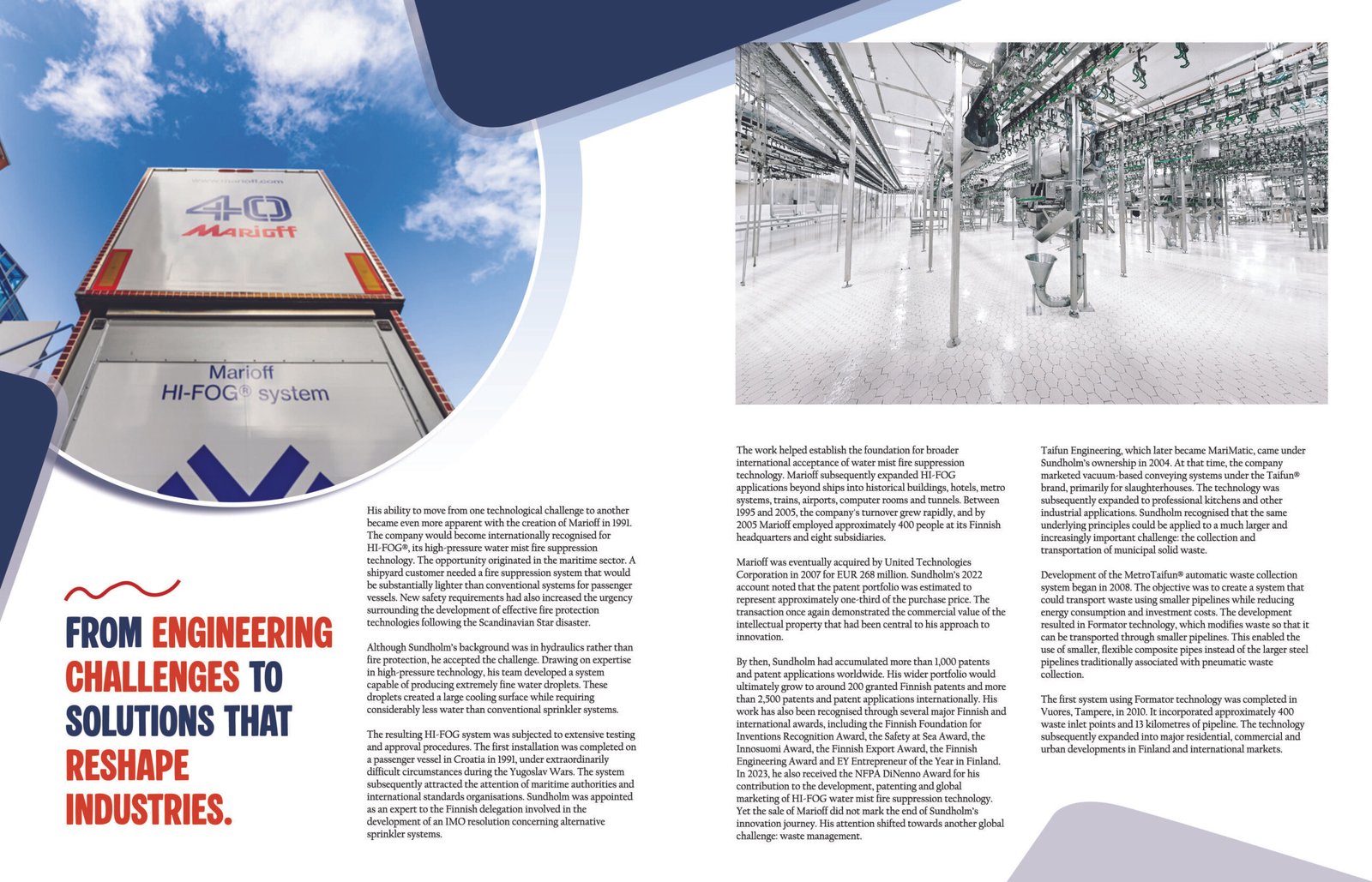
His ability to move from one technological challenge to another became even more apparent with the creation of Marioff in 1991. The company would become internationally recognised for HI-FOG®, its high-pressure water mist fire suppression technology. The opportunity originated in the maritime sector. A shipyard customer needed a fire suppression system that would be substantially lighter than conventional systems for passenger vessels. New safety requirements had also increased the urgency surrounding the development of effective fire protection technologies following the Scandinavian Star disaster.
Although Sundholm’s background was in hydraulics rather than fire protection, he accepted the challenge. Drawing on expertise in high-pressure technology, his team developed a system capable of producing extremely fine water droplets. These droplets created a large cooling surface while requiring considerably less water than conventional sprinkler systems.
The resulting HI-FOG system was subjected to extensive testing and approval procedures. The first installation was completed on a passenger vessel in Croatia in 1991, under extraordinarily difficult circumstances during the Yugoslav Wars. The system subsequently attracted the attention of maritime authorities and international standards organisations. Sundholm was appointed as an expert to the Finnish delegation involved in the development of an IMO resolution concerning alternative sprinkler systems.
The work helped establish the foundation for broader international acceptance of water mist fire suppression technology. Marioff subsequently expanded HI-FOG applications beyond ships into historical buildings, hotels, metro systems, trains, airports, computer rooms and tunnels. Between 1995 and 2005, the company’s turnover grew rapidly, and by 2005 Marioff employed approximately 400 people at its Finnish headquarters and eight subsidiaries.
Marioff was eventually acquired by United Technologies Corporation in 2007 for EUR 268 million. Sundholm’s 2022 account noted that the patent portfolio was estimated to represent approximately one-third of the purchase price. The transaction once again demonstrated the commercial value of the intellectual property that had been central to his approach to innovation.
By then, Sundholm had accumulated more than 1,000 patents and patent applications worldwide. His wider portfolio would ultimately grow to around 200 granted Finnish patents and more than 2,500 patents and patent applications internationally. His work has also been recognised through several major Finnish and international awards, including the Finnish Foundation for Inventions Recognition Award, the Safety at Sea Award, the Innosuomi Award, the Finnish Export Award, the Finnish Engineering Award and EY Entrepreneur of the Year in Finland. In 2023, he also received the NFPA DiNenno Award for his contribution to the development, patenting and global marketing of HI-FOG water mist fire suppression technology. Yet the sale of Marioff did not mark the end of Sundholm’s innovation journey. His attention shifted towards another global challenge: waste management.
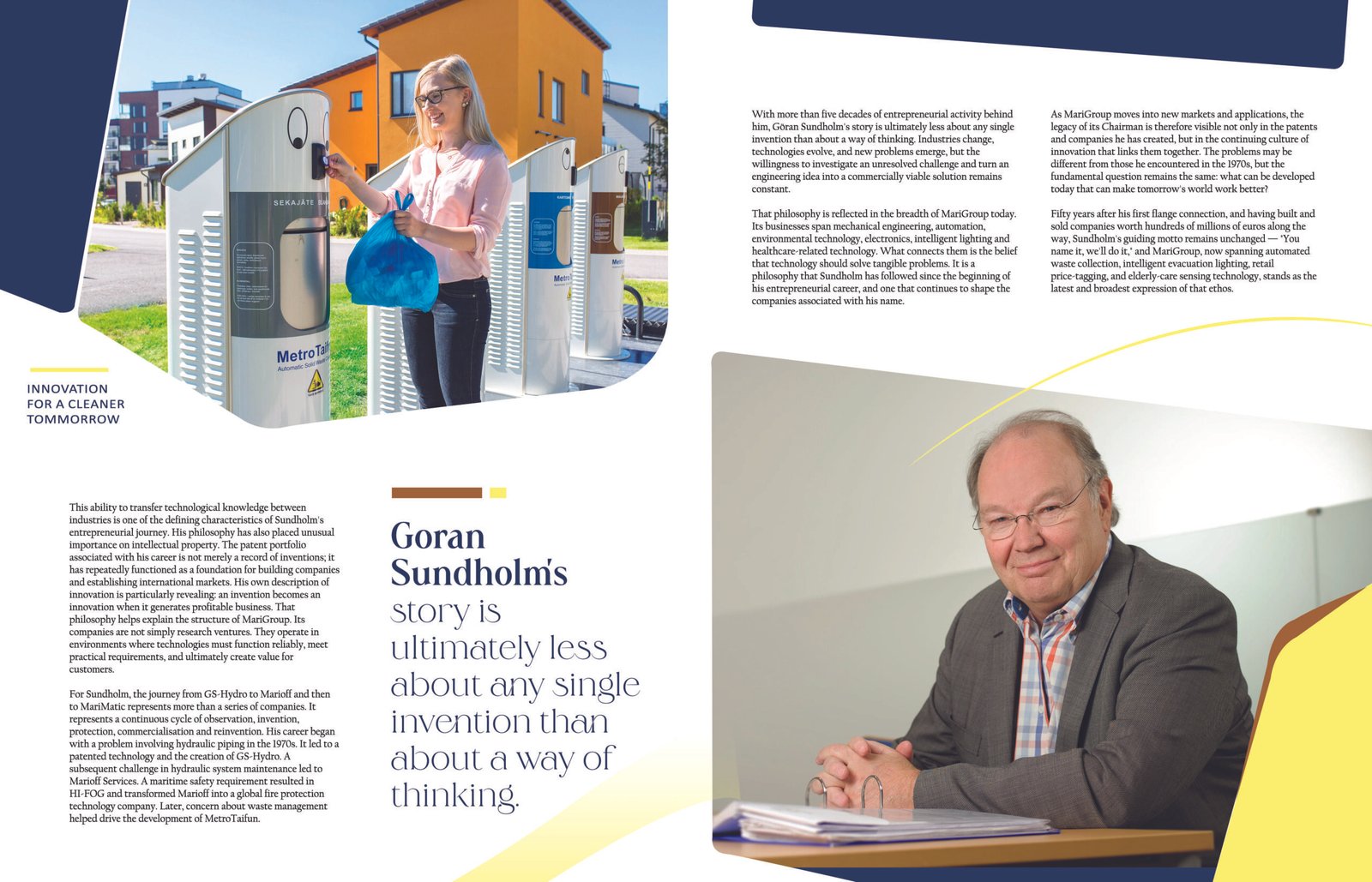
Taifun Engineering, which later became MariMatic, came under Sundholm’s ownership in 2004. At that time, the company marketed vacuum-based conveying systems under the Taifun® brand, primarily for slaughterhouses. The technology was subsequently expanded to professional kitchens and other industrial applications. Sundholm recognised that the same underlying principles could be applied to a much larger and increasingly important challenge: the collection and transportation of municipal solid waste.
Development of the MetroTaifun® automatic waste collection system began in 2008. The objective was to create a system that could transport waste using smaller pipelines while reducing energy consumption and investment costs. The development resulted in Formator technology, which modifies waste so that it can be transported through smaller pipelines. This enabled the use of smaller, flexible composite pipes instead of the larger steel pipelines traditionally associated with pneumatic waste collection.
The first system using Formator technology was completed in Vuores, Tampere, in 2010. It incorporated approximately 400 waste inlet points and 13 kilometres of pipeline. The technology subsequently expanded into major residential, commercial and urban developments in Finland and international markets.
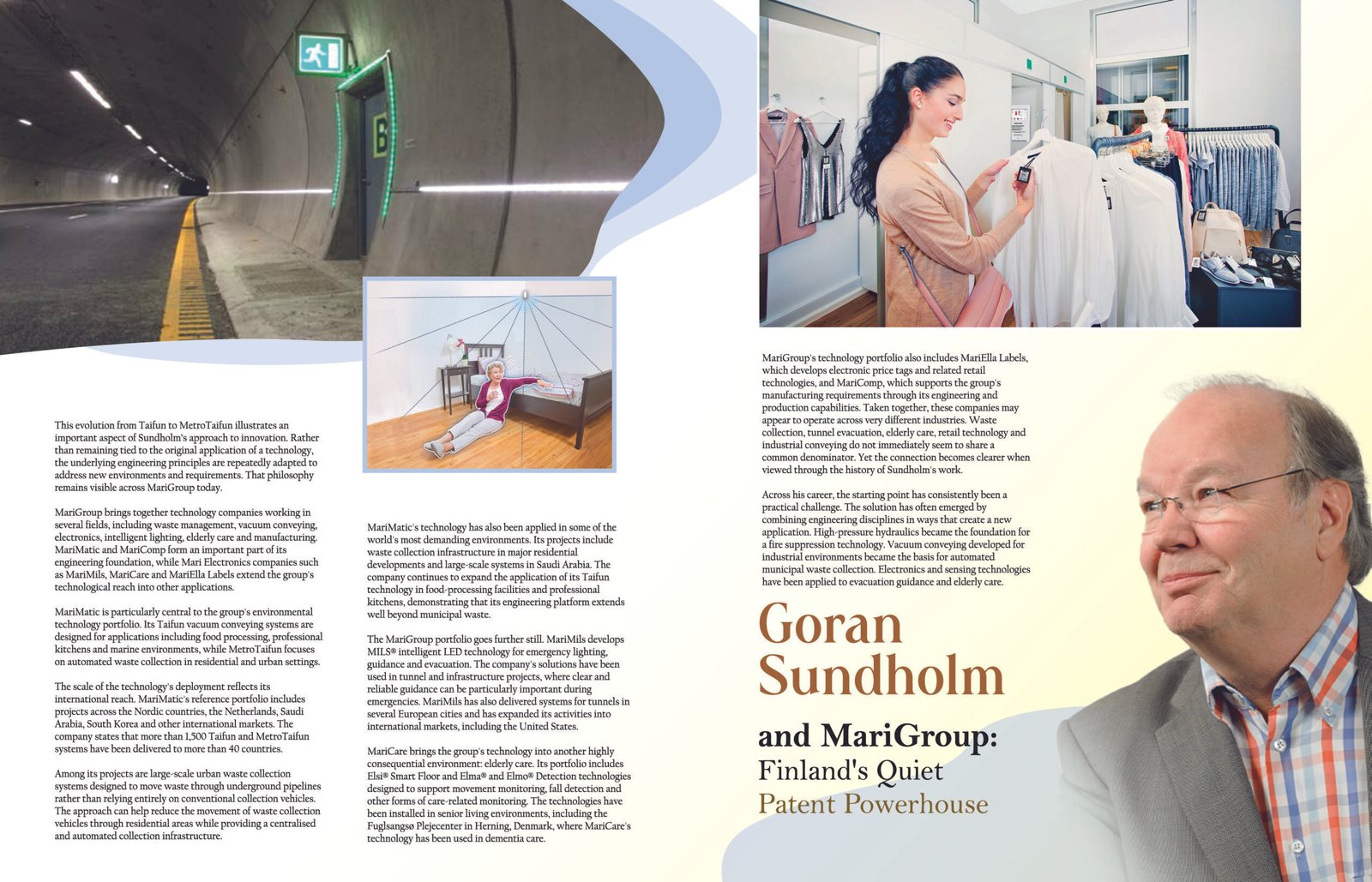
This evolution from Taifun to MetroTaifun illustrates an important aspect of Sundholm’s approach to innovation. Rather than remaining tied to the original application of a technology, the underlying engineering principles are repeatedly adapted to address new environments and requirements. That philosophy remains visible across MariGroup today.
MariGroup brings together technology companies working in several fields, including waste management, vacuum conveying, electronics, intelligent lighting, elderly care and manufacturing. MariMatic and MariComp form an important part of its engineering foundation, while MariElectronics companies such as MariMils, MariCare and MariElla Labels extend the group’s technological reach into other applications.
MariMatic is particularly central to the group’s environmental technology portfolio. Its Taifun vacuum conveying systems are designed for applications including food processing, professional kitchens and marine environments, while MetroTaifun focuses on automated waste collection in residential and urban settings.
The scale of the technology’s deployment reflects its international reach. MariMatic’s reference portfolio includes projects across the Nordic countries, the Netherlands, Saudi Arabia, South Korea and other international markets. The company states that more than 1,500 Taifun and MetroTaifun systems have been delivered to more than 40 countries.
Among its projects are large-scale urban waste collection systems designed to move waste through underground pipelines rather than relying entirely on conventional collection vehicles. The approach can help reduce the movement of waste collection vehicles through residential areas while providing a centralised and automated collection infrastructure.
MariMatic’s technology has also been applied in some of the world’s most demanding environments. Its projects include waste collection infrastructure in major residential developments and large-scale systems in Saudi Arabia. The company continues to expand the application of its Taifun technology in food-processing facilities and professional kitchens, demonstrating that its engineering platform extends well beyond municipal waste.
The MariGroup portfolio goes further still. MariMils develops MILS® intelligent LED technology for emergency lighting, guidance and evacuation. The company’s solutions have been used in tunnel and infrastructure projects, where clear and reliable guidance can be particularly important during emergencies. MariMils has also delivered systems for tunnels in several European cities and has expanded its activities into international markets, including the United States.
MariCare brings the group’s technology into another highly consequential environment: elderly care. Its portfolio includes Elsi® Smart Floor and Elma® and Elmo® Detection technologies designed to support movement monitoring, fall detection and other forms of care-related monitoring. The technologies have been installed in senior living environments, including the FuglsangsøPlejecenter in Herning, Denmark, where MariCare’s technology has been used in dementia care.
MariGroup’s technology portfolio also includes MariElla Labels, which develops electronic price tags and related retail technologies, and MariComp, which supports the group’s manufacturing requirements through its engineering and production capabilities. Taken together, these companies may appear to operate across very different industries. Waste collection, tunnel evacuation, elderly care, retail technology and industrial conveying do not immediately seem to share a common denominator. Yet the connection becomes clearer when viewed through the history of Sundholm’s work.
Across his career, the starting point has consistently been a practical challenge. The solution has often emerged by combining engineering disciplines in ways that create a new application. High-pressure hydraulics became the foundation for a fire suppression technology. Vacuum conveying developed for industrial environments became the basis for automated municipal waste collection. Electronics and sensing technologies have been applied to evacuation guidance and elderly care.
This ability to transfer technological knowledge between industries is one of the defining characteristics of Sundholm’s entrepreneurial journey. His philosophy has also placed unusual importance on intellectual property. The patent portfolio associated with his career is not merely a record of inventions; it has repeatedly functioned as a foundation for building companies and establishing international markets. His own description of innovation is particularly revealing: an invention becomes an innovation when it generates profitable business. That philosophy helps explain the structure of MariGroup. Its companies are not simply research ventures. They operate in environments where technologies must function reliably, meet practical requirements, and ultimately create value for customers.
For Sundholm, the journey from GS-Hydro to Marioff and then to MariMatic represents more than a series of companies. It represents a continuous cycle of observation, invention, protection, commercialisation and reinvention. His career began with a problem involving hydraulic piping in the 1970s. It led to a patented technology and the creation of GS-Hydro. A subsequent challenge in hydraulic system maintenance led to Marioff Services. A maritime safety requirement resulted in HI-FOG and transformed Marioff into a global fire protection technology company. Later, concern about waste management helped drive the development of MetroTaifun.
With more than five decades of entrepreneurial activity behind him, Göran Sundholm’s story is ultimately less about any single invention than about a way of thinking. Industries change, technologies evolve, and new problems emerge, but the willingness to investigate an unresolved challenge and turn an engineering idea into a commercially viable solution remains constant.
That philosophy is reflected in the breadth of MariGroup today. Its businesses span mechanical engineering, automation, environmental technology, electronics, intelligent lighting and healthcare-related technology. What connects them is the belief that technology should solve tangible problems. It is a philosophy that Sundholm has followed since the beginning of his entrepreneurial career, and one that continues to shape the companies associated with his name.
As MariGroup moves into new markets and applications, the legacy of its Chairman is therefore visible not only in the patents and companies he has created, but in the continuing culture of innovation that links them together. The problems may be different from those he encountered in the 1970s, but the fundamental question remains the same: what can be developed today that can make tomorrow’s world work better?
Fifty years after his first flange connection, and having built and sold companies worth hundreds of millions of euros along the way, Sundholm’s guiding motto remains unchanged — “You name it, we’ll do it,” and MariGroup, now spanning automated waste collection, intelligent evacuation lighting, retail price-tagging, and elderly-care sensing technology, stands as the latest and broadest expression of that ethos.

Copyrights ©2026 Unified Magazine. All rights reserved