


Unified Magazine provides expert insights on business, technology, and innovation. We partner with leading entrepreneurs to provide strategic advice and market analysis, empowering professionals and entrepreneurs with resources for success and growth.
Subscribe to Updates
Get the latest creative news from FooBar about art, design and business.

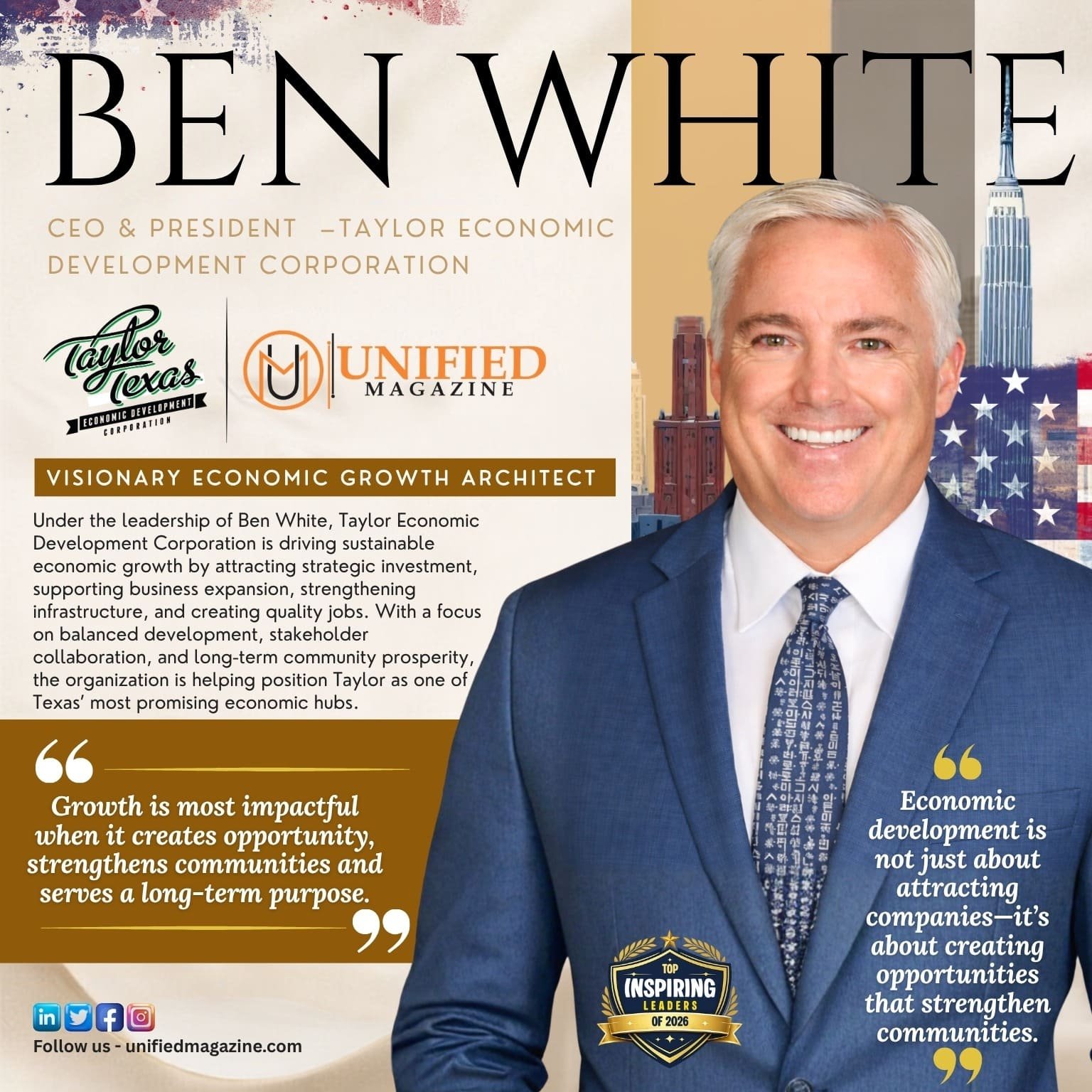
Ben White: From Vision to Growth
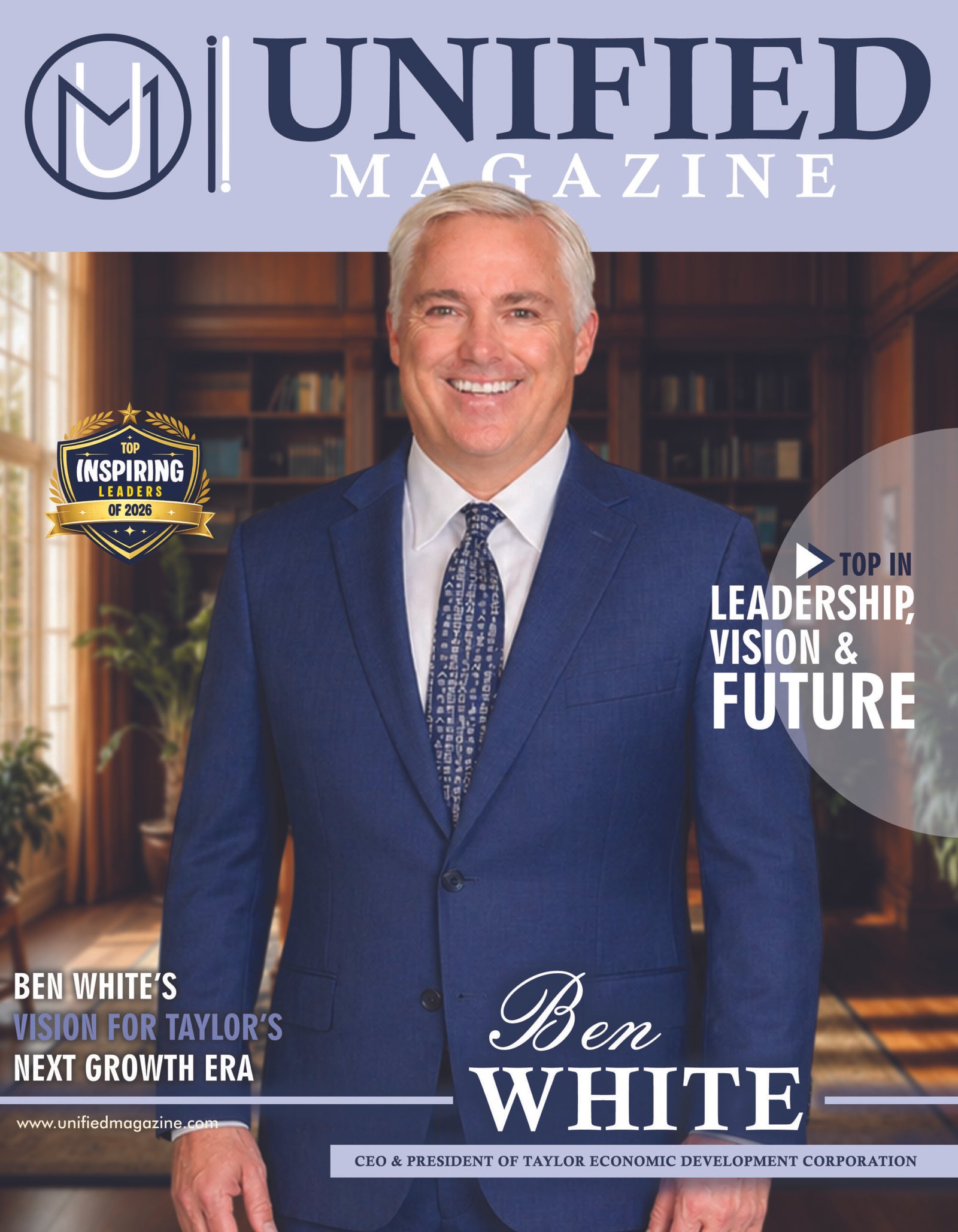
CEO & President of Taylor Economic Development Corporation
Taylor Economic Development Corporation is focused on fostering sustainable economic growth by attracting investment, supporting business expansion, and creating opportunities that strengthen the local economy. By leveraging Taylor’s strategic location, robust infrastructure, rail connectivity, and skilled workforce, the organization works to build a diverse and resilient business environment while preserving the community’s character and ensuring long-term prosperity for residents and businesses alike.
Ben White's Exclusive Interview
Ben White’s journey to becoming CEO and President of Taylor Economic Development Corporation is rooted in a long-standing commitment to shaping communities through thoughtful, strategic growth. With years of experience in economic development across multiple cities, his decision to step into this leadership role was driven by a sense of timing as much as purpose. Taylor, in his view, is not just another city; it is a community on the edge of transformation, with the rare opportunity to define what that growth could look like for decades to come.
What drew White to Taylor was the momentum already building within the region. Located near the economic powerhouse of Austin, the city offered both proximity and possibility. Unlike more saturated urban centers, Taylor had something increasingly scarce: space to grow. With significant land availability and the distinction of hosting the only rail park in Central Texas, the city presented a unique platform for large-scale industrial and commercial development. For White, the appeal lay in connecting these assets—land, infrastructure, and workforce—to create a thriving economic ecosystem.
Taylor’s attractiveness to investors is not built on a single factor but on a combination of strengths that work together seamlessly. Its location provides access to a robust and expanding talent pool, supported by nearby educational institutions and regional workforce pipelines. The city’s connectivity through highways and rail offers logistical advantages that many competing locations cannot match. At the same time, Taylor has invested in scalable infrastructure, ensuring that water, wastewater, and other essential systems can support future growth. Beyond these tangible assets, Taylor benefits from a pro-business environment and a community culture that welcomes long-term investment.
Yet, for White, growth is never just about attracting investment; it is about shaping it responsibly. One of his core priorities is ensuring that development in Taylor remains balanced and sustainable. This begins with being intentional about the types of industries the city pursues. Rather than relying heavily on a single sector, the focus is on building a diverse economic base that can withstand shifts in the market. This diversity not only creates resilience but also opens up opportunities for people across different skill levels and professions.
Equally important is preserving the character of the community. As Taylor grows, White emphasizes the need to invest in its historic downtown and local businesses, ensuring that the city retains its identity even as it evolves. Infrastructure planning also plays a crucial role in maintaining balance. By carefully managing projects with varying resource demands, the city can support growth without overextending its utilities or compromising quality of life.
White approaches economic development with a dual mindset, balancing long-term planning with immediate opportunities. Rather than treating these as competing priorities, he sees them as interconnected. The city’s strategic plan acts as a guiding framework, ensuring that every new project aligns with broader goals. When opportunities arise, they are evaluated not just for their short-term benefits but for their long-term impact on the community. In this way, each project becomes a building block toward a larger vision of sustainable growth.
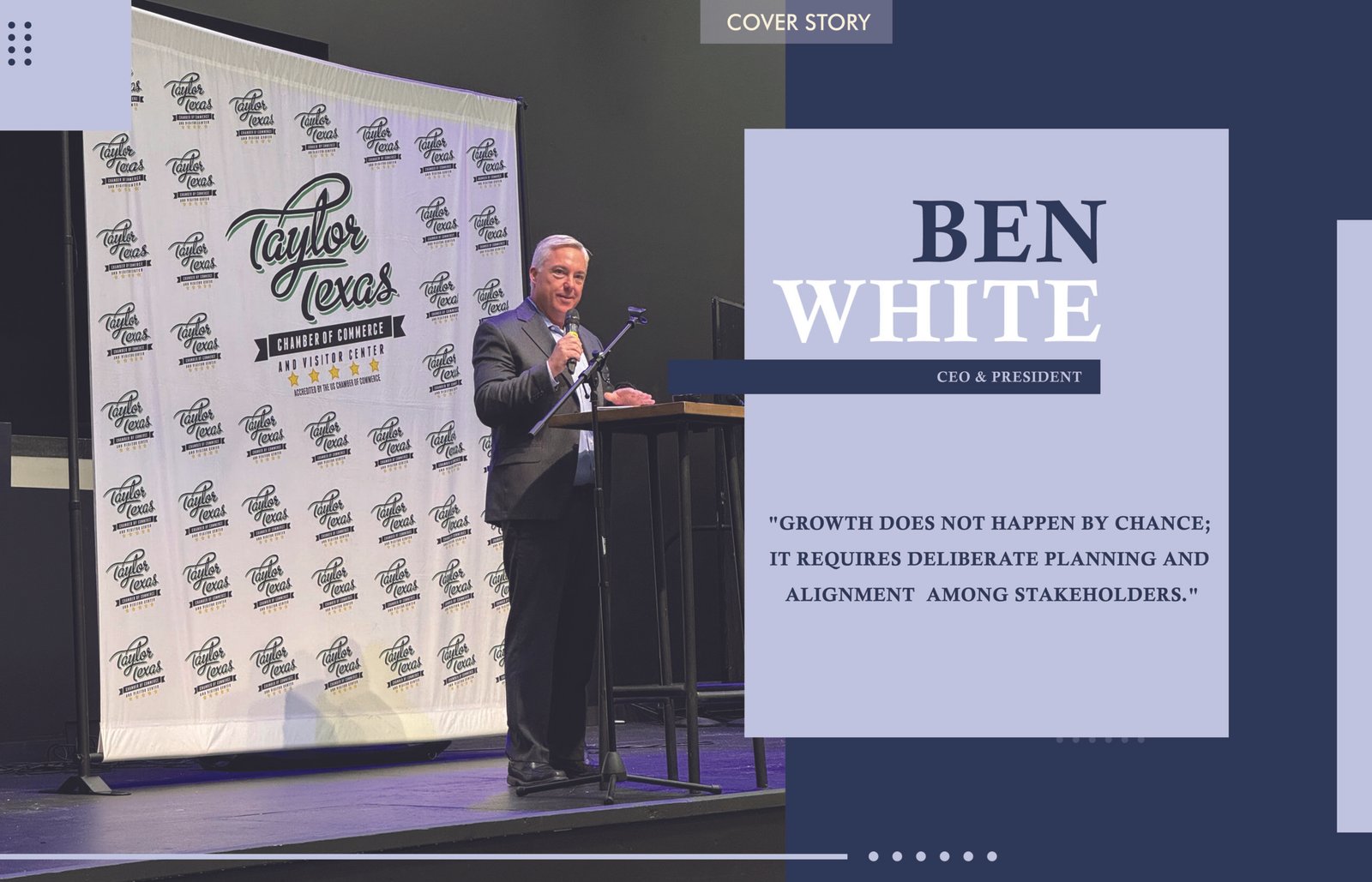
His experience in cities such as Cedar Park, Round Rock, Greenville, and Rowlett has shaped this perspective. One of the key lessons he carries forward is the importance of having a clear, long-term vision. Growth, he believes, does not happen by chance; it requires deliberate planning and alignment among stakeholders. Another lesson is the need to diversify the tax base, reducing dependency on any single industry. White also recognizes the often-overlooked value of startups and emerging businesses, which can drive innovation and create long-term economic vitality alongside larger employers.
White takes a measured and disciplined approach to incentives, viewing them as a tool rather than a strategy. While incentives can play a role in attracting businesses, they are never the primary driver of decision-making. Instead, they are used strategically to close gaps or maintain competitiveness. If a company’s interest is based solely on incentives, it raises concerns about long-term alignment. Rather than relying on upfront commitments alone, he emphasizes performance-based incentives, ensuring that any benefits offered to companies are directly tied to measurable outcomes such as job creation, capital investment, and project timelines. Agreements often include clawback provisions, allowing the city to recover incentives if commitments are not met. This layered approach protects taxpayer resources while building community confidence that growth is being pursued responsibly. For White, the goal is to attract organizations that see the inherent value of Taylor—its people, infrastructure, and potential rather than those seeking short-term financial advantages.
Ensuring that growth benefits the broader community is another central focus. White evaluates projects based on their overall return to the city, including their contribution to the tax base, infrastructure, and public services. Environmental responsibility is also a key consideration, with an emphasis on sustainable development that protects local resources. Most importantly, he prioritizes job creation that truly benefits residents, opportunities that are accessible, meaningful, and capable of supporting long-term economic stability.
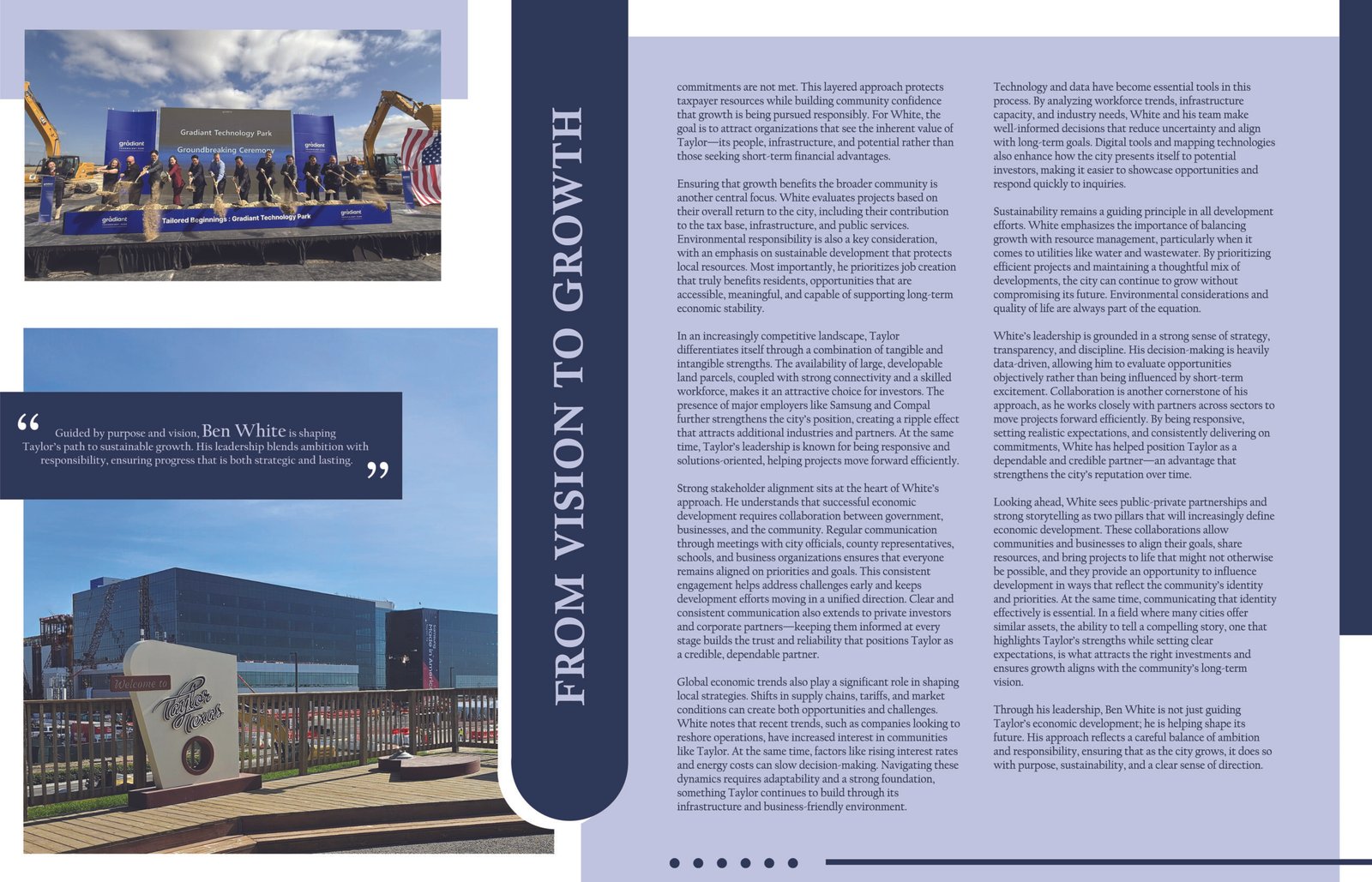
In an increasingly competitive landscape, Taylor differentiates itself through a combination of tangible and intangible strengths. The availability of large, developable land parcels, coupled with strong connectivity and a skilled workforce, makes it an attractive choice for investors. The presence of major employers like Samsung and Compal further strengthens the city’s position, creating a ripple effect that attracts additional industries and partners. At the same time, Taylor’s leadership is known for being responsive and solutions-oriented, helping projects move forward efficiently.
Strong stakeholder alignment sits at the heart of White’s approach. He understands that successful economic development requires collaboration between government, businesses, and the community. Regular communication through meetings with city officials, county representatives, schools, and business organizations ensures that everyone remains aligned on priorities and goals. This consistent engagement helps address challenges early and keeps development efforts moving in a unified direction. Clear and consistent communication also extends to private investors and corporate partners—keeping them informed at every stage builds the trust and reliability that positions Taylor as a credible, dependable partner.
Global economic trends also play a significant role in shaping local strategies. Shifts in supply chains, tariffs, and market conditions can create both opportunities and challenges. White notes that recent trends, such as companies looking to reshore operations, have increased interest in communities like Taylor. At the same time, factors like rising interest rates and energy costs can slow decision-making. Navigating these dynamics requires adaptability and a strong foundation, something Taylor continues to build through its infrastructure and business-friendly environment.
Technology and data have become essential tools in this process. By analyzing workforce trends, infrastructure capacity, and industry needs, White and his team make well-informed decisions that reduce uncertainty and align with long-term goals. Digital tools and mapping technologies also enhance how the city presents itself to potential investors, making it easier to showcase opportunities and respond quickly to inquiries.
Sustainability remains a guiding principle in all development efforts. White emphasizes the importance of balancing growth with resource management, particularly when it comes to utilities like water and wastewater. By prioritizing efficient projects and maintaining a thoughtful mix of developments, the city can continue to grow without compromising its future. Environmental considerations and quality of life are always part of the equation.
White’s leadership is grounded in a strong sense of strategy, transparency, and discipline. His decision-making is heavily data-driven, allowing him to evaluate opportunities objectively rather than being influenced by short-term excitement. Collaboration is another cornerstone of his approach, as he works closely with partners across sectors to move projects forward efficiently. By being responsive, setting realistic expectations, and consistently delivering on commitments, White has helped position Taylor as a dependable and credible partner—an advantage that strengthens the city’s reputation over time.
Looking ahead, White sees public-private partnerships and strong storytelling as two pillars that will increasingly define economic development. These collaborations allow communities and businesses to align their goals, share resources, and bring projects to life that might not otherwise be possible, and they provide an opportunity to influence development in ways that reflect the community’s identity and priorities. At the same time, communicating that identity effectively is essential. In a field where many cities offer similar assets, the ability to tell a compelling story, one that highlights Taylor’s strengths while setting clear expectations, is what attracts the right investments and ensures growth aligns with the community’s long-term vision.
Through his leadership, Ben White is not just guiding Taylor’s economic development; he is helping shape its future. His approach reflects a careful balance of ambition and responsibility, ensuring that as the city grows, it does so with purpose, sustainability, and a clear sense of direction.
Copyrights ©2026 Unified Magazine. All rights reserved