
Unified Magazine provides expert insights on business, technology, and innovation. We partner with leading entrepreneurs to provide strategic advice and market analysis, empowering professionals and entrepreneurs with resources for success and growth.
Subscribe to Updates
Get the latest creative news from FooBar about art, design and business.

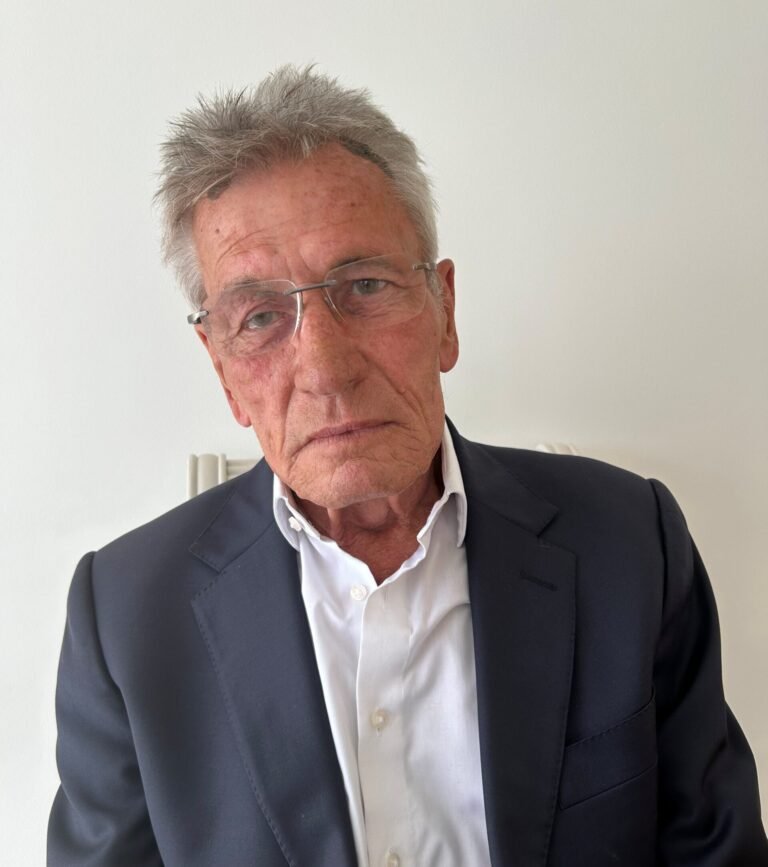
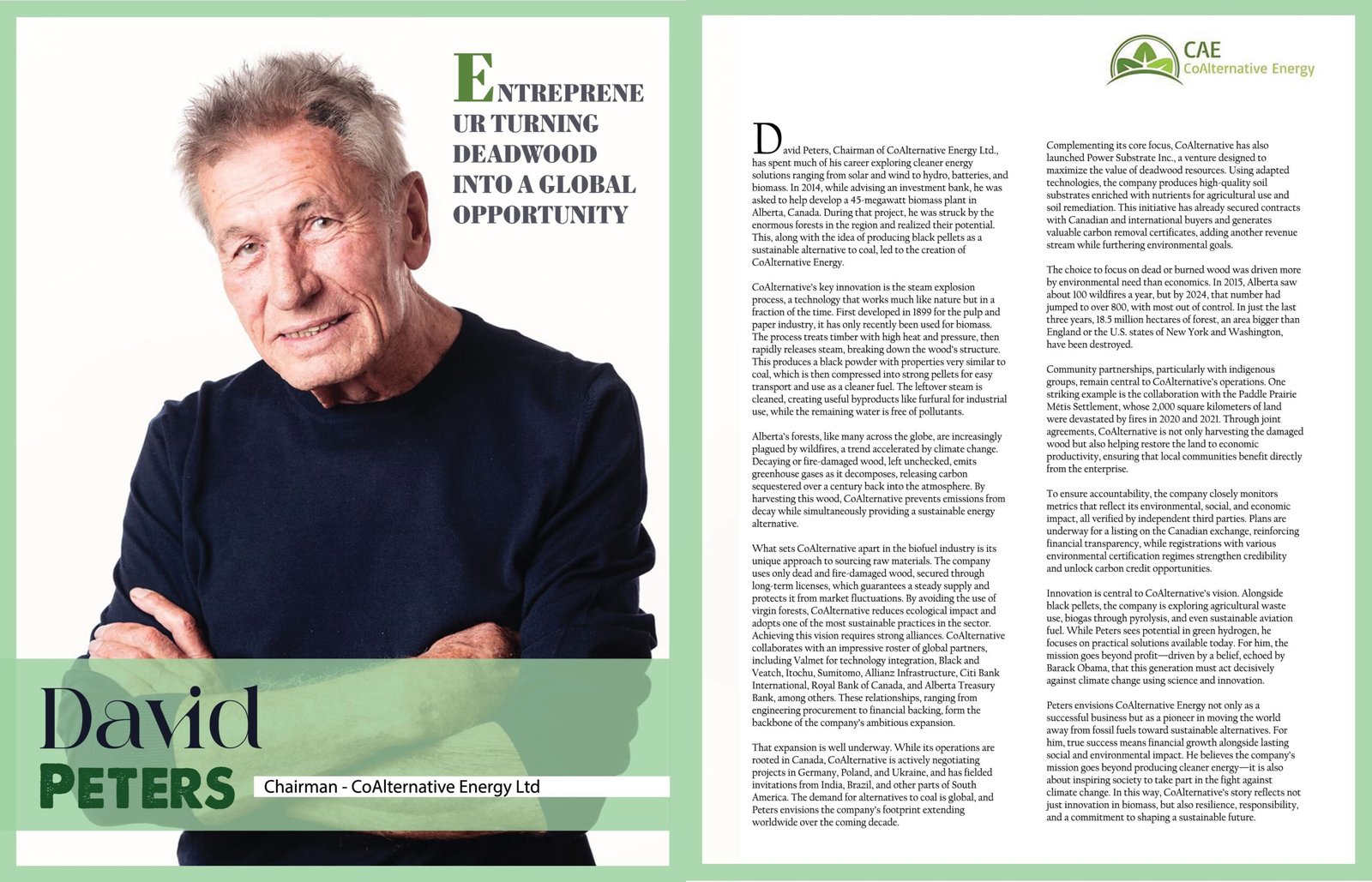
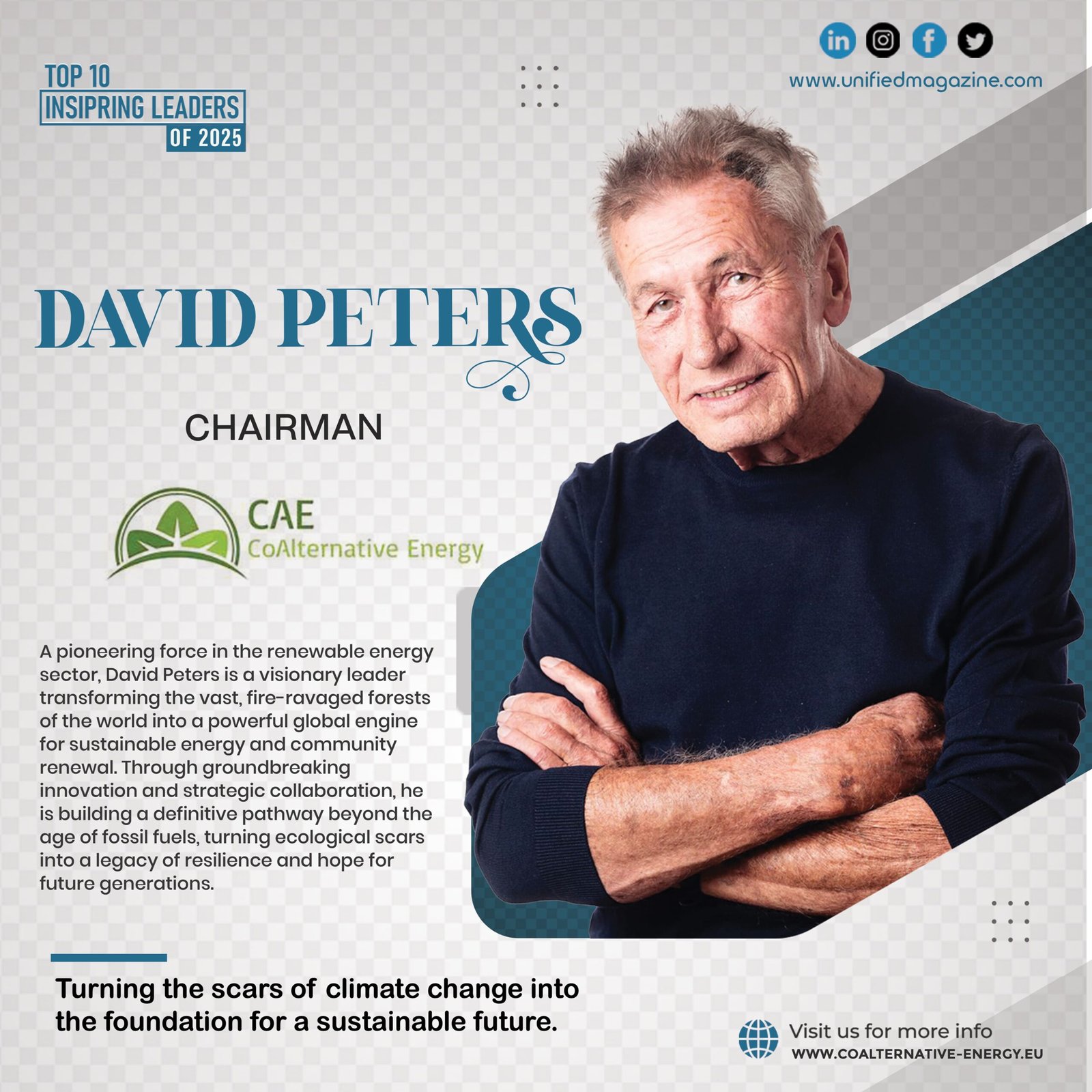
David Peters: Entrepreneur Turning Deadwood Into a Global Opportunity
Chairman of CoAlternative Energy Ltd
COALTERNATIVE ENERGY LTD., is building a “Black Pellets” plant in Meadows County (Alberta), which will be operational by the third quarter of 2025 and will produce 360,000 tons of CAE Green Energy pellets per year. The entire production is sold to Idemitsu. This amount is enough to supply 750,000 homes with clean energy.
David Peters Exclusive
David Peters, Chairman of CoAlternative Energy Ltd., has spent much of his career exploring cleaner energy solutions ranging from solar and wind to hydro, batteries, and biomass. In 2014, while advising an investment bank, he was asked to help develop a 45-megawatt biomass plant in Alberta, Canada. During that project, he was struck by the enormous forests in the region and realized their potential. This, along with the idea of producing black pellets as a sustainable alternative to coal, led to the creation of CoAlternative Energy.
CoAlternative’s key innovation is the steam explosion process, a technology that works much like nature but in a fraction of the time. First developed in 1899 for the pulp and paper industry, it has only recently been used for biomass. The process treats timber with high heat and pressure, then rapidly releases steam, breaking down the wood’s structure. This produces a black powder with properties very similar to coal, which is then compressed into strong pellets for easy transport and use as a cleaner fuel. The leftover steam is cleaned, creating useful byproducts like furfural for industrial use, while the remaining water is free of pollutants.
Alberta’s forests, like many across the globe, are increasingly plagued by wildfires, a trend accelerated by climate change. Decaying or fire-damaged wood, left unchecked, emits greenhouse gases as it decomposes, releasing carbon sequestered over a century back into the atmosphere. By harvesting this wood, CoAlternative prevents emissions from decay while simultaneously providing a sustainable energy alternative.
What sets CoAlternative apart in the biofuel industry is its unique approach to sourcing raw materials. The company uses only dead and fire-damaged wood, secured through long-term licenses, which guarantees a steady supply and protects it from market fluctuations. By avoiding the use of virgin forests, CoAlternative reduces ecological impact and adopts one of the most sustainable practices in the sector. Achieving this vision requires strong alliances. CoAlternative collaborates with an impressive roster of global partners, including Valmet for technology integration, Black and Veatch, Itochu, Sumitomo, Allianz Infrastructure, Citi Bank International, Royal Bank of Canada, and Alberta Treasury Bank, among others. These relationships, ranging from engineering procurement to financial backing, form the backbone of the company’s ambitious expansion.
That expansion is well underway. While its operations are rooted in Canada, CoAlternative is actively negotiating projects in Germany, Poland, and Ukraine, and has fielded invitations from India, Brazil, and other parts of South America. The demand for alternatives to coal is global, and Peters envisions the company’s footprint extending worldwide over the coming decade.
Complementing its core focus, CoAlternative has also launched Power Substrate Inc., a venture designed to maximize the value of deadwood resources. Using adapted technologies, the company produces high-quality soil substrates enriched with nutrients for agricultural use and soil remediation. This initiative has already secured contracts with Canadian and international buyers and generates valuable carbon removal certificates, adding another revenue stream while furthering environmental goals.
The choice to focus on dead or burned wood was driven more by environmental need than economics. In 2015, Alberta saw about 100 wildfires a year, but by 2024, that number had jumped to over 800, with most out of control. In just the last three years, 18.5 million hectares of forest, an area bigger than England or the U.S. states of New York and Washington, have been destroyed.
Community partnerships, particularly with indigenous groups, remain central to CoAlternative’s operations. One striking example is the collaboration with the Paddle Prairie Métis Settlement, whose 2,000 square kilometers of land were devastated by fires in 2020 and 2021. Through joint agreements, CoAlternative is not only harvesting the damaged wood but also helping restore the land to economic productivity, ensuring that local communities benefit directly from the enterprise.
To ensure accountability, the company closely monitors metrics that reflect its environmental, social, and economic impact, all verified by independent third parties. Plans are underway for a listing on the Canadian exchange, reinforcing financial transparency, while registrations with various environmental certification regimes strengthen credibility and unlock carbon credit opportunities.
Innovation is central to CoAlternative’s vision. Alongside black pellets, the company is exploring agricultural waste use, biogas through pyrolysis, and even sustainable aviation fuel. While Peters sees potential in green hydrogen, he focuses on practical solutions available today. For him, the mission goes beyond profit—driven by a belief, echoed by Barack Obama, that this generation must act decisively against climate change using science and innovation.
Peters envisions CoAlternative Energy not only as a successful business but as a pioneer in moving the world away from fossil fuels toward sustainable alternatives. For him, true success means financial growth alongside lasting social and environmental impact. He believes the company’s mission goes beyond producing cleaner energy—it is also about inspiring society to take part in the fight against climate change. In this way, CoAlternative’s story reflects not just innovation in biomass, but also resilience, responsibility, and a commitment to shaping a sustainable future.


Copyrights ©2026 Unified Magazine. All rights reserved