

Unified Magazine provides expert insights on business, technology, and innovation. We partner with leading entrepreneurs to provide strategic advice and market analysis, empowering professionals and entrepreneurs with resources for success and growth.
Subscribe to Updates
Get the latest creative news from FooBar about art, design and business.

Dr. Andrea Radak: The Science and Compassion Behind Dr. Andrea Radak's Practice
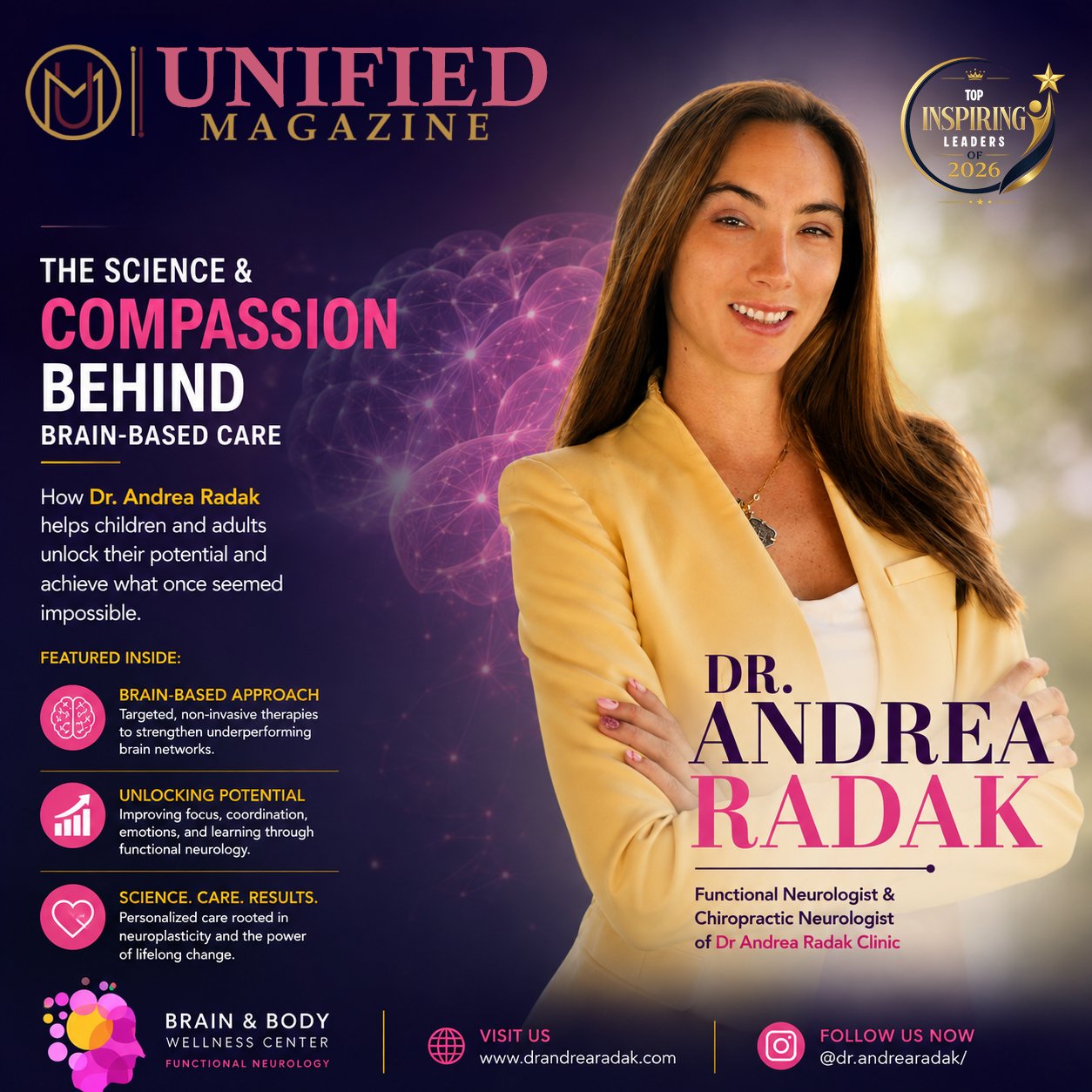
Functional Neurologist and Chiropractic Neurologist at Dr Andrea Radak Clinic
Dr. Andrea Radak is a Doctor of Chiropractic specializing in functional developmental neurology and personalized brain-based rehabilitation. Inspired by her family’s experience with autism, she built a practice focused on understanding neurological function and unlocking individual potential. Through non-invasive, individualized approaches, she combines neuroscience, rehabilitation, and whole-person care to help children and adults achieve meaningful progress.
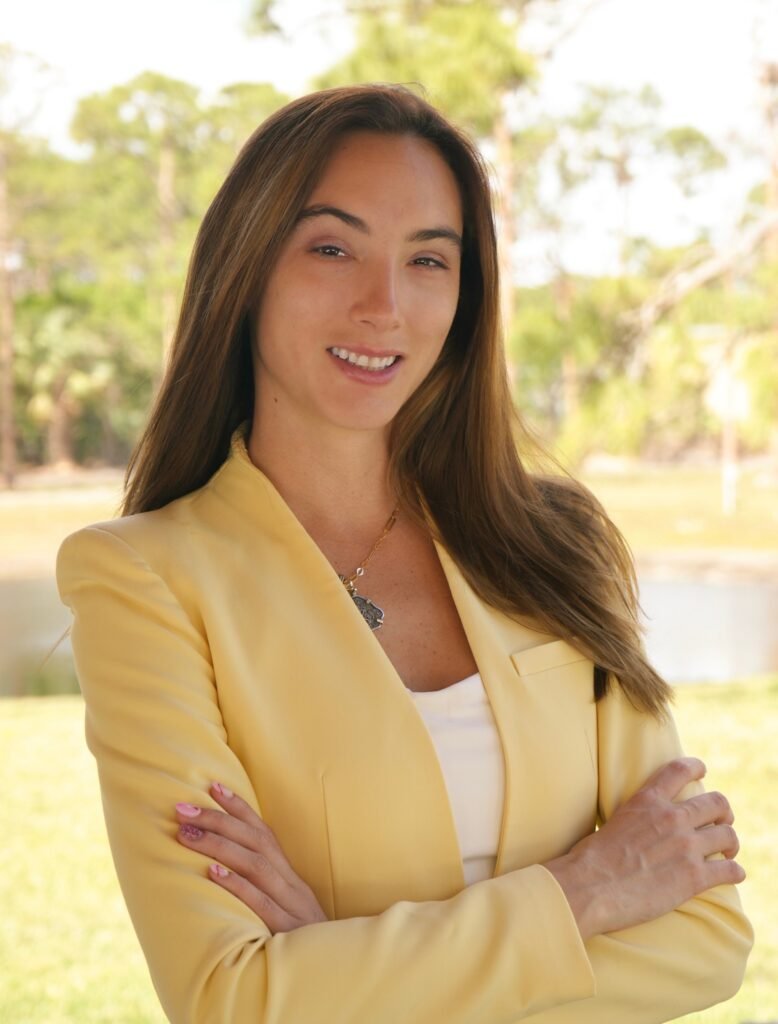
Dr. Andrea Radak's Excellence
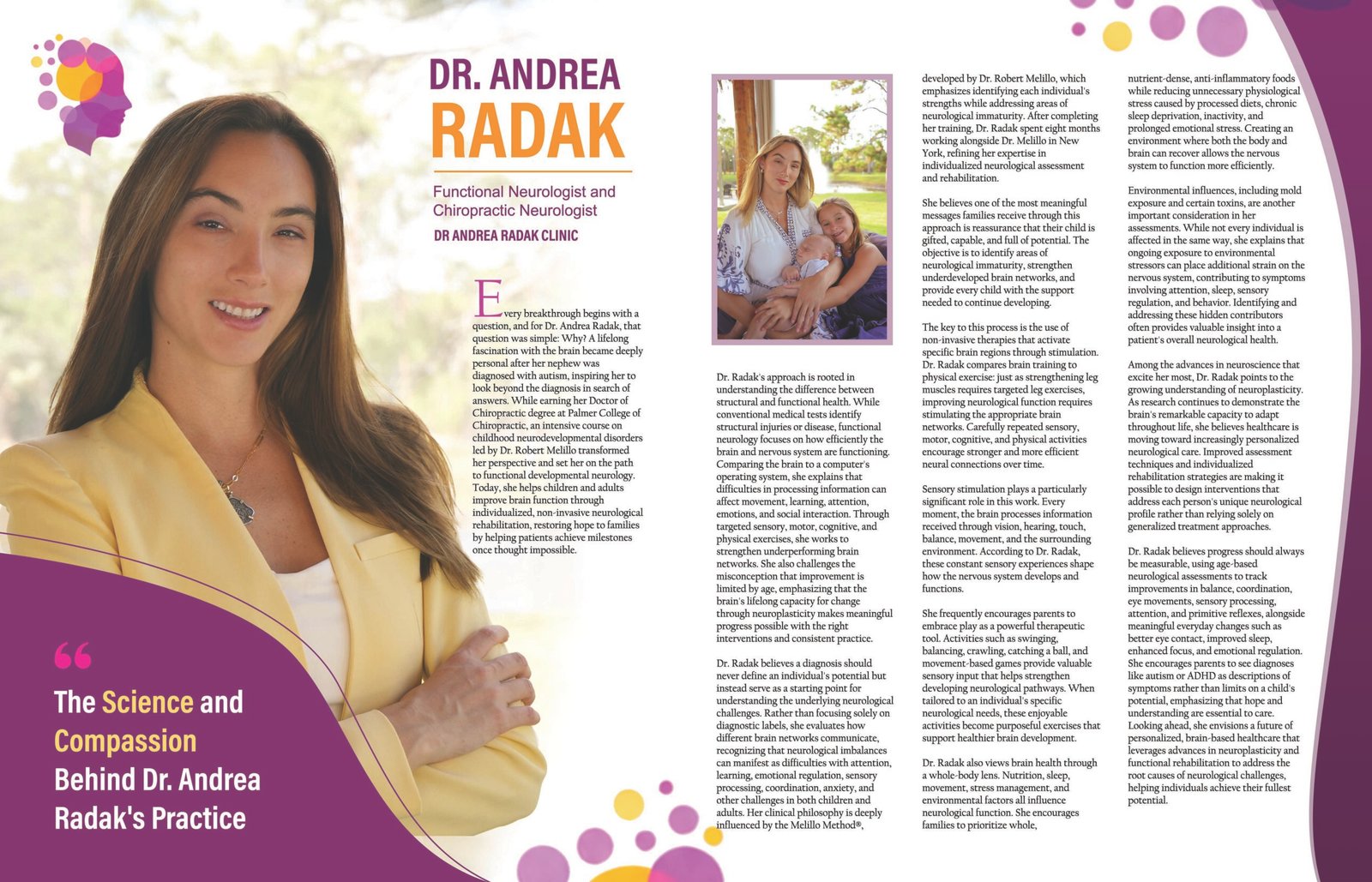
Every breakthrough begins with a question, and for Dr. Andrea Radak, that question was simple: Why? A lifelong fascination with the brain became deeply personal after her nephew was diagnosed with autism, inspiring her to look beyond the diagnosis in search of answers. While earning her Doctor of Chiropractic degree at Palmer College of Chiropractic, an intensive course on childhood neurodevelopmental disorders led by Dr. Robert Melillo transformed her perspective and set her on the path to functional developmental neurology. Today, she helps children and adults improve brain function through individualized, non-invasive neurological rehabilitation, restoring hope to families by helping patients achieve milestones once thought impossible.
Dr. Radak’s approach is rooted in understanding the difference between structural and functional health. While conventional medical tests identify structural injuries or disease, functional neurology focuses on how efficiently the brain and nervous system are functioning. Comparing the brain to a computer’s operating system, she explains that difficulties in processing information can affect movement, learning, attention, emotions, and social interaction. Through targeted sensory, motor, cognitive, and physical exercises, she works to strengthen underperforming brain networks. She also challenges the misconception that improvement is limited by age, emphasizing that the brain’s lifelong capacity for change through neuroplasticity makes meaningful progress possible with the right interventions and consistent practice.
Dr. Radak believes a diagnosis should never define an individual’s potential but instead serve as a starting point for understanding the underlying neurological challenges. Rather than focusing solely on diagnostic labels, she evaluates how different brain networks communicate, recognizing that neurological imbalances can manifest as difficulties with attention, learning, emotional regulation, sensory processing, coordination, anxiety, and other challenges in both children and adults. Her clinical philosophy is deeply influenced by the Melillo Method®, developed by Dr. Robert Melillo, which emphasizes identifying each individual’s strengths while addressing areas of neurological immaturity. After completing her training, Dr. Radak spent eight months working alongside Dr. Melillo in New York, refining her expertise in individualized neurological assessment and rehabilitation.
She believes one of the most meaningful messages families receive through this approach is reassurance that their child is gifted, capable, and full of potential. The objective is to identify areas of neurological immaturity, strengthen underdeveloped brain networks, and provide every child with the support needed to continue developing.
The key to this process is the use of non-invasive therapies that activate specific brain regions through stimulation. Dr. Radak compares brain training to physical exercise: just as strengthening leg muscles requires targeted leg exercises, improving neurological function requires stimulating the appropriate brain networks. Carefully repeated sensory, motor, cognitive, and physical activities encourage stronger and more efficient neural connections over time.
Sensory stimulation plays a particularly significant role in this work. Every moment, the brain processes information received through vision, hearing, touch, balance, movement, and the surrounding environment. According to Dr. Radak, these constant sensory experiences shape how the nervous system develops and functions.
She frequently encourages parents to embrace play as a powerful therapeutic tool. Activities such as swinging, balancing, crawling, catching a ball, and movement-based games provide valuable sensory input that helps strengthen developing neurological pathways. When tailored to an individual’s specific neurological needs, these enjoyable activities become purposeful exercises that support healthier brain development.
Dr. Radak also views brain health through a whole-body lens. Nutrition, sleep, movement, stress management, and environmental factors all influence neurological function. She encourages families to prioritize whole, nutrient-dense, anti-inflammatory foods while reducing unnecessary physiological stress caused by processed diets, chronic sleep deprivation, inactivity, and prolonged emotional stress. Creating an environment where both the body and brain can recover allows the nervous system to function more efficiently.
Environmental influences, including mold exposure and certain toxins, are another important consideration in her assessments. While not every individual is affected in the same way, she explains that ongoing exposure to environmental stressors can place additional strain on the nervous system, contributing to symptoms involving attention, sleep, sensory regulation, and behavior. Identifying and addressing these hidden contributors often provides valuable insight into a patient’s overall neurological health.
Among the advances in neuroscience that excite her most, Dr. Radak points to the growing understanding of neuroplasticity. As research continues to demonstrate the brain’s remarkable capacity to adapt throughout life, she believes healthcare is moving toward increasingly personalized neurological care. Improved assessment techniques and individualized rehabilitation strategies are making it possible to design interventions that address each person’s unique neurological profile rather than relying solely on generalized treatment approaches.
Dr. Radak believes progress should always be measurable, using age-based neurological assessments to track improvements in balance, coordination, eye movements, sensory processing, attention, and primitive reflexes, alongside meaningful everyday changes such as better eye contact, improved sleep, enhanced focus, and emotional regulation. She encourages parents to see diagnoses like autism or ADHD as descriptions of symptoms rather than limits on a child’s potential, emphasizing that hope and understanding are essential to care. Looking ahead, she envisions a future of personalized, brain-based healthcare that leverages advances in neuroplasticity and functional rehabilitation to address the root causes of neurological challenges, helping individuals achieve their fullest potential.


Copyrights ©2026 Unified Magazine. All rights reserved