


Unified Magazine provides expert insights on business, technology, and innovation. We partner with leading entrepreneurs to provide strategic advice and market analysis, empowering professionals and entrepreneurs with resources for success and growth.
Subscribe to Updates
Get the latest creative news from FooBar about art, design and business.

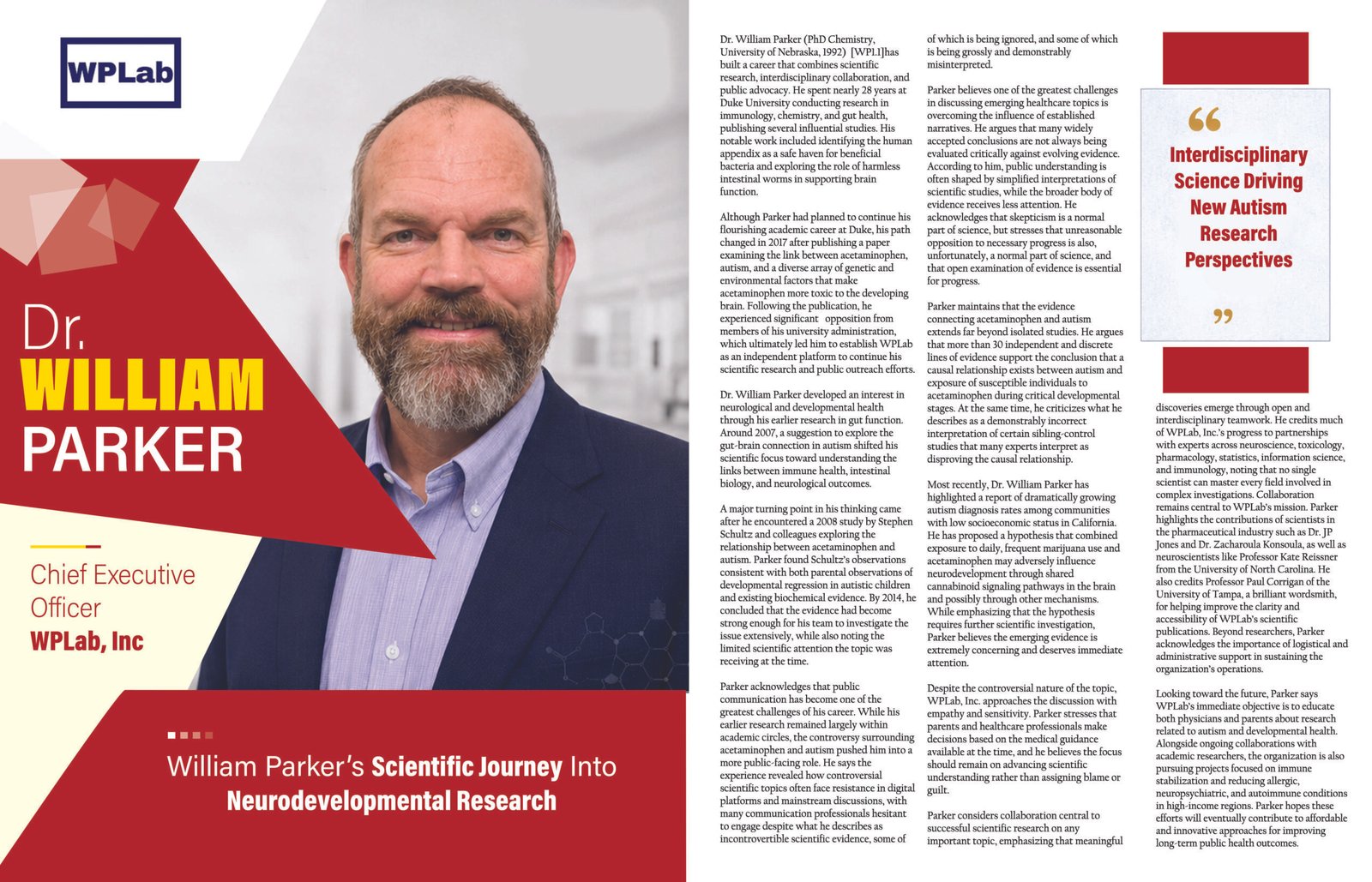
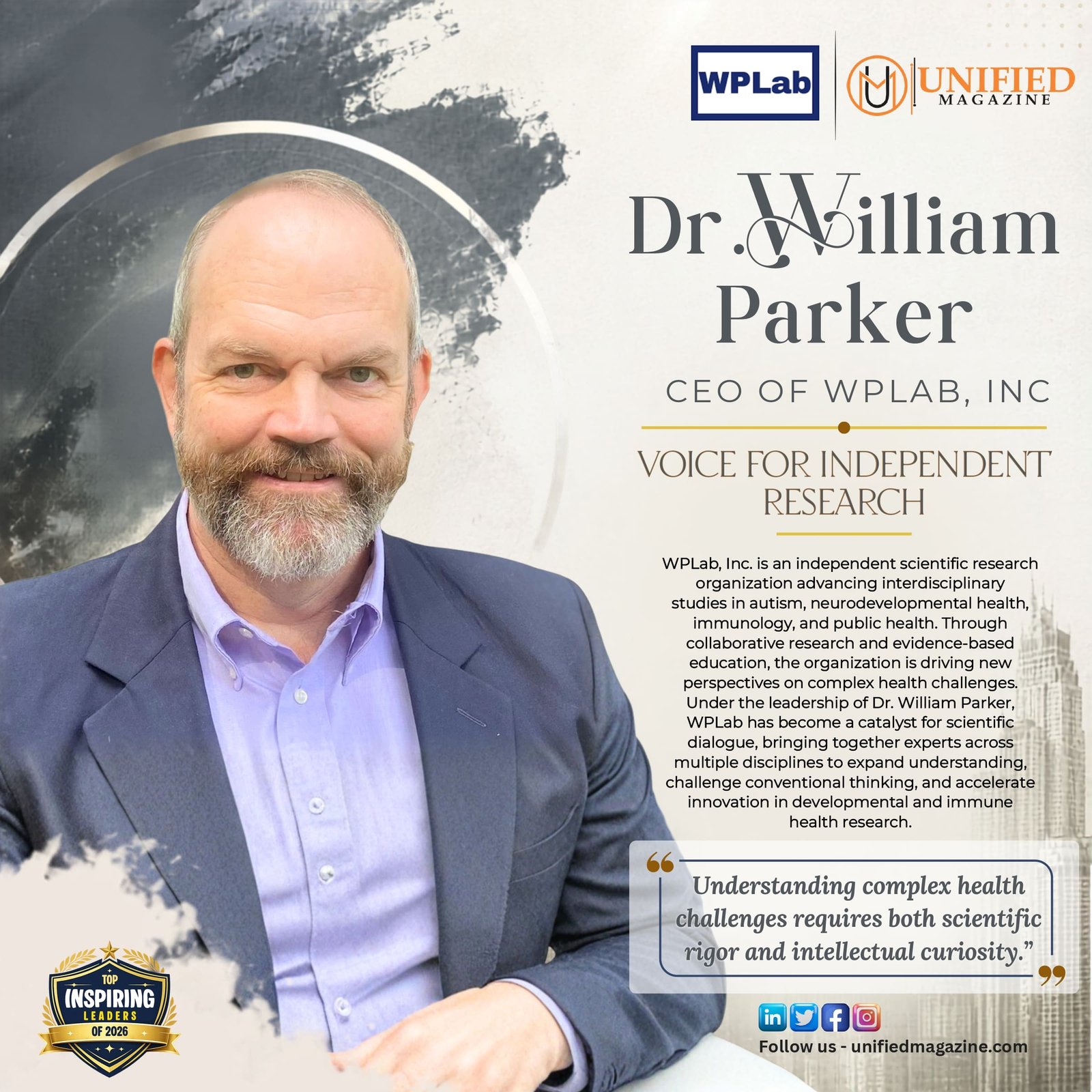
Dr. William Parker: Interdisciplinary Science Driving New Autism Research Perspectives
Chief Executive Officer – WPLab, Inc
WPLab, Inc. is an independent scientific research organization focused on advancing interdisciplinary studies in autism, neurodevelopmental health, immunology, and public health. Through collaborative research, scientific inquiry, and public education, the organization explores complex health challenges while encouraging evidence-based discussions that can contribute to improved understanding, innovation, and long-term health outcomes.
Parker's Exclusive
Dr. William Parker (PhD Chemistry, University of Nebraska, 1992) has built a career that combines scientific research, interdisciplinary collaboration, and public advocacy. He spent nearly 28 years at Duke University conducting research in immunology, chemistry, and gut health, publishing several influential studies. His notable work included identifying the human appendix as a safe haven for beneficial bacteria and exploring the role of harmless intestinal worms in supporting brain function.
Although Parker had planned to continue his flourishing academic career at Duke, his path changed in 2017 after publishing a paper examining the link between acetaminophen, autism, and a diverse array of genetic and environmental factors that make acetaminophen more toxic to the developing brain. Following the publication, he experienced significant opposition from members of his university administration, which ultimately led him to establish WPLab as an independent platform to continue his scientific research and public outreach efforts.
Dr. William Parker developed an interest in neurological and developmental health through his earlier research in gut function. Around 2007, a suggestion to explore the gut-brain connection in autism shifted his scientific focus toward understanding the links between immune health, intestinal biology, and neurological outcomes.
A major turning point in his thinking came after he encountered a 2008 study by Stephen Schultz and colleagues exploring the relationship between acetaminophen and autism. Parker found Schultz’s observations consistent with both parental observations of developmental regression in autistic children and existing biochemical evidence. By 2014, he concluded that the evidence had become strong enough for his team to investigate the issue extensively, while also noting the limited scientific attention the topic was receiving at the time.
Parker acknowledges that public communication has become one of the greatest challenges of his career. While his earlier research remained largely within academic circles, the controversy surrounding acetaminophen and autism pushed him into a more public-facing role. He says the experience revealed how controversial scientific topics often face resistance in digital platforms and mainstream discussions, with many communication professionals hesitant to engage despite what he describes as incontrovertible scientific evidence, some of which is being ignored, and some of which is being grossly and demonstrably misinterpreted.
Parker believes one of the greatest challenges in discussing emerging healthcare topics is overcoming the influence of established narratives. He argues that many widely accepted conclusions are not always being evaluated critically against evolving evidence. According to him, public understanding is often shaped by simplified interpretations of scientific studies, while the broader body of evidence receives less attention. He acknowledges that skepticism is a normal part of science, but stresses that unreasonable opposition to necessary progress is also, unfortunately, a normal part of science, and that open examination of evidence is essential for progress.
Parker maintains that the evidence connecting acetaminophen and autism extends far beyond isolated studies. He argues that more than 30 independent and discrete lines of evidence support the conclusion that a causal relationship exists between autism and exposure of susceptible individuals to acetaminophen during critical developmental stages. At the same time, he criticizes what he describes as a demonstrably incorrect interpretation of certain sibling-control studies that many experts interpret as disproving the causal relationship.
Most recently, Dr. William Parker has highlighted a report of dramatically growing autism diagnosis rates among communities with low socioeconomic status in California. He has proposed a hypothesis that combined exposure to daily, frequent marijuana use and acetaminophen may adversely influence neurodevelopment through shared cannabinoid signaling pathways in the brain and possibly through other mechanisms. While emphasizing that the hypothesis requires further scientific investigation, Parker believes the emerging evidence is extremely concerning and deserves immediate attention.
Despite the controversial nature of the topic, WPLab, Inc. approaches the discussion with empathy and sensitivity. Parker stresses that parents and healthcare professionals make decisions based on the medical guidance available at the time, and he believes the focus should remain on advancing scientific understanding rather than assigning blame or guilt.
Parker considers collaboration central to successful scientific research on any important topic, emphasizing that meaningful discoveries emerge through open and interdisciplinary teamwork. He credits much of WPLab, Inc.’s progress to partnerships with experts across neuroscience, toxicology, pharmacology, statistics, information science, and immunology, noting that no single scientist can master every field involved in complex investigations. Collaboration remains central to WPLab’s mission. Parker highlights the contributions of scientists in the pharmaceutical industry such as Dr. JP Jones and Dr. Zacharoula Konsoula, as well as neuroscientists like Professor Kate Reissner from the University of North Carolina. He also credits Professor Paul Corrigan of the University of Tampa, a brilliant wordsmith, for helping improve the clarity and accessibility of WPLab’s scientific publications. Beyond researchers, Parker acknowledges the importance of logistical and administrative support in sustaining the organization’s operations.
Looking toward the future, Parker says WPLab’s immediate objective is to educate both physicians and parents about research related to autism and developmental health. Alongside ongoing collaborations with academic researchers, the organization is also pursuing projects focused on immune stabilization and reducing allergic, neuropsychiatric, and autoimmune conditions in high-income regions. Parker hopes these efforts will eventually contribute to affordable and innovative approaches for improving long-term public health outcomes.

Copyrights ©2026 Unified Magazine. All rights reserved